Table of Contents
- What Does Production Efficiency Actually Mean in Cannabis?
- Eliminating Manual Filling Bottlenecks
- Faster Changeover Between SKUs
- Fewer Errors, Less Rework
- Labor Consolidation
- Consistency Across Shifts
- How DDS Cartridge Fillers Are Built for Efficiency
- Frequently Asked Questions
Production efficiency in cannabis vape manufacturing is not just about how many cartridges you can fill in an hour. It is about how much of your team's time, your product, and your operational capacity is being used effectively versus lost to bottlenecks, errors, and rework. Cartridge filling machines address efficiency at multiple points in the production process, and the cumulative impact on an operation is usually larger than operators expect before they make the switch.
What Does Production Efficiency Actually Mean in Cannabis?
Efficiency in a cannabis production context comes down to three things: output per labor hour, consistency of that output, and how much of your raw material actually ends up in finished product. A highly efficient operation produces more cartridges per shift, with consistent fill weights, using fewer staff hours and less wasted product than a less efficient one.
Manual cartridge filling underperforms on all three measures. Automated cartridge fillers address each one directly.
Key efficiency gains from cartridge filling automation include:
- Higher output per operator per shift
- Consistent fill weights that reduce compliance risk and rework
- Reduced product loss from dripping, overfilling, and handling errors
- Faster changeover between hardware formats and SKUs
- Consistent performance across shifts regardless of operator experience
Eliminating Manual Filling Bottlenecks
In most cannabis vape operations, manual cartridge filling is the production bottleneck. It is the step that limits how much finished product moves through the facility per day, and it is the step most sensitive to variables like operator fatigue, experience level, and oil temperature.
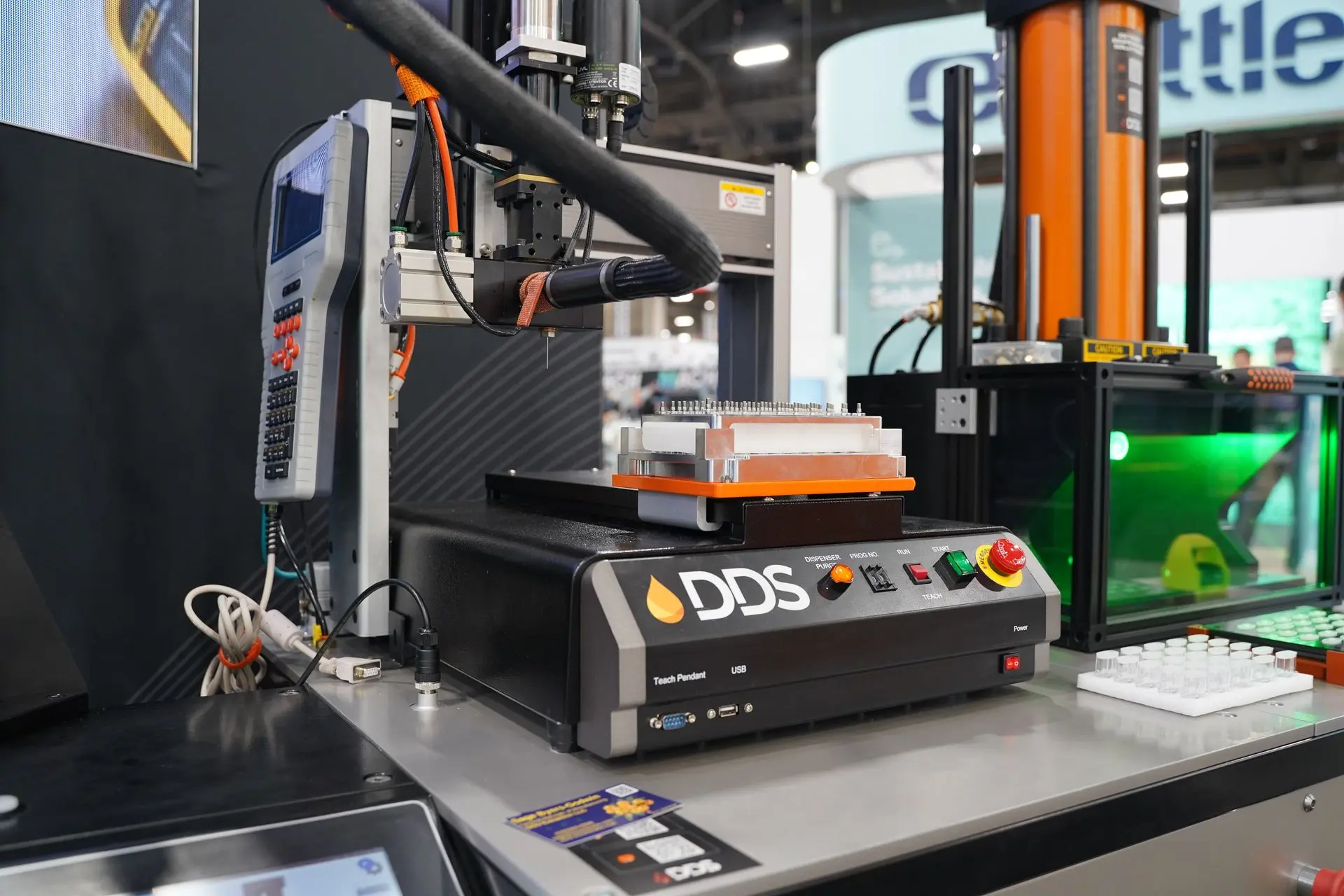
Automated filling removes the human variables from the filling step itself. The CFM-1800 and CFS-1800 deliver consistent output across a full production run at up to 1,800 cartridges per hour, regardless of where you are in the shift. The filling step stops being the bottleneck and becomes a reliable, fixed-rate process the rest of the operation can be planned around.
Faster Changeover Between SKUs
Operations running multiple cartridge formats, hardware types, or oil formulations need to change over between SKUs regularly. In manual operations that changeover is relatively simple — pick up different hardware, change the oil. In semi-automated systems with camera-based vision alignment, changeover can involve camera recalibration, lighting adjustments, and software tuning that adds significant time between runs.
DDS uses a jig-based alignment system built into both the CFM-1800 and CFS-1800. Custom jigs are engineered in-house for specific cartridge hardware formats and swap in and out without camera calibration or software adjustments. Changeover is faster and more reliable, which means less unproductive time between production runs and more flexibility to run multiple SKUs across a single shift.
Fewer Errors, Less Rework
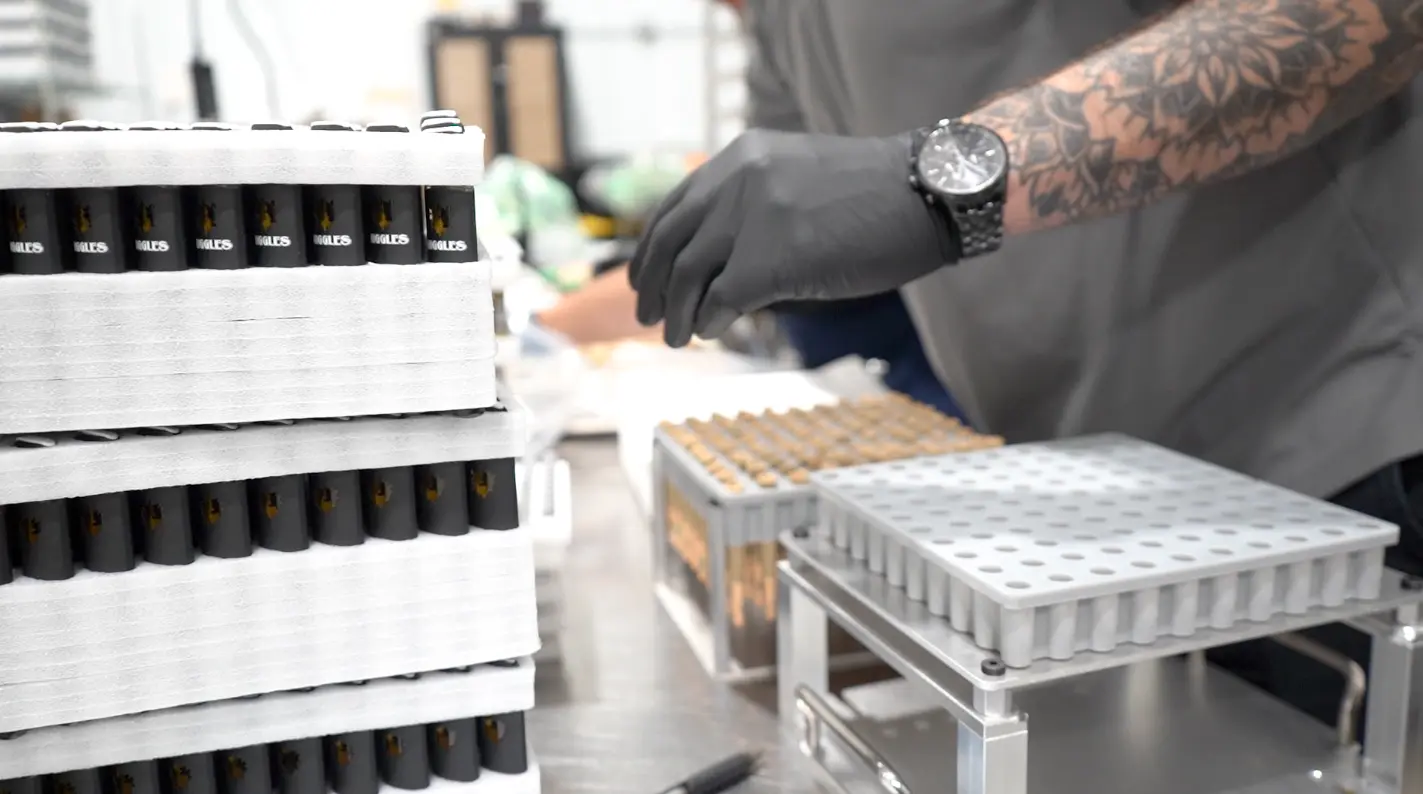
Errors in manual cartridge filling take several forms: underfills that fail compliance checks, overfills that waste product, capping errors that require rework, and handling damage to cartridges or hardware. Each error represents time and product that has to be accounted for somewhere in the operation.
Automated systems reduce errors at every point. Plus or minus 1% dosing accuracy on the CFM-1800 and CFS-1800 eliminates the fill weight variation that creates compliance and quality issues. Integrated capping on the CFM-1800 removes a manual handling step entirely. Jig-based alignment means cartridges are held in the correct position for every fill cycle rather than relying on operator placement.
Less rework means more of your production time goes toward finished product rather than fixing problems created earlier in the process.
Labor Consolidation
Manual cartridge filling at any meaningful volume requires multiple operators. Filling, capping, and handling product through each stage of the process adds up to significant labor hours per shift that could be redirected elsewhere.
Both the CFM-1800 and CFS-1800 are designed for single-operator use. One trained operator can manage the complete filling workflow from loading hardware through finished output. For operations running multiple shifts, that labor consolidation multiplies across the week into a meaningful reduction in production labor costs.
The system consumables for both machines are straightforward to manage and available directly through the DDS shop, keeping maintenance overhead predictable and low.
Consistency Across Shifts
One of the less-discussed efficiency costs in manual production is shift-to-shift variation. The first shift of the day and the last shift of the week do not produce the same results. Operator fatigue, personnel changes, and the natural variation in manual work mean that output quality and quantity fluctuates in ways that are difficult to plan around.
Automated systems produce the same result at the end of a Friday shift as they do at the start of a Monday morning. That consistency makes production planning more reliable, reduces the inspection burden on output from later shifts, and gives operations a more accurate picture of actual capacity.
How DDS Cartridge Fillers Are Built for Efficiency
The CFM-1800 and CFS-1800 are built around the specific efficiency requirements of cannabis vape production. Key design decisions that support operational efficiency include:
- True-rod positive displacement valve with servo-driven actuation for consistent, repeatable dosing
- Low-temperature filling to preserve oil quality and eliminate heat-related process variability
- Jig-based alignment for fast, reliable changeover between hardware formats
- Single-operator design to minimize labor requirements
- Mobile base for flexible production floor positioning
Both machines are available to purchase through DDS in-house leasing for operations that prefer to manage the cost over time.
Frequently Asked Questions
How do cartridge fillers improve production efficiency? Cartridge filling machines improve efficiency by eliminating manual filling bottlenecks, reducing labor requirements, delivering consistent dosing accuracy, enabling faster changeover between SKUs, and producing reliable output across shifts. The cumulative effect is more finished product per labor hour with less waste and rework.
What is the biggest production bottleneck in cannabis vape manufacturing? For most operations, manual cartridge filling is the primary bottleneck. It limits throughput, introduces inconsistency, and is sensitive to operator variables like fatigue and experience. Automated filling removes those constraints and turns the filling step into a reliable, fixed-rate process.
How does jig-based alignment improve changeover efficiency? Jig-based alignment uses precision-engineered fixtures to hold cartridges in fixed position without camera calibration or software adjustments. Swapping jigs between hardware formats takes significantly less time than recalibrating a vision-based system, which reduces unproductive changeover time between production runs.
Can one operator run an automated cartridge filling machine? Yes. Both the CFM-1800 and CFS-1800 are designed for single-operator use. One trained operator can manage the complete filling workflow from loading hardware to finished output, significantly reducing the labor overhead compared to manual filling.
Does automated filling reduce product waste? Yes. Precise valve control minimizes dripping and overfilling between cycles. Jig-based alignment reduces handling errors. Together these reduce the product loss that accumulates in manual operations through inconsistent fills and handling damage.
Where can I learn more about DDS cartridge filling equipment? The full cartridge filling equipment lineup is available on the DDS website, with both machines available to purchase or lease. For specific questions contact the DDS team.