Table of Contents
- What Post-Processing Actually Covers
- Start With Vacuum Processing Infrastructure
- Add Decarboxylation Capacity
- Then Dispensing and Filling Equipment
- Build in Stages, Not All at Once
- Frequently Asked Questions
What Post-Processing Actually Covers
Post-processing is everything that happens to cannabis after it leaves the grow and before it reaches the consumer. Depending on the products an operation produces, that can include solvent purging, decarboxylation, drying, extraction, concentrate dispensing, cartridge filling, and flower infusion.
The equipment involved varies significantly depending on product mix. An operation focused on concentrates has very different infrastructure needs than one running vape cartridges or infused pre-rolls. The starting point is always knowing what you are producing and at what volume.
Start With Vacuum Processing Infrastructure
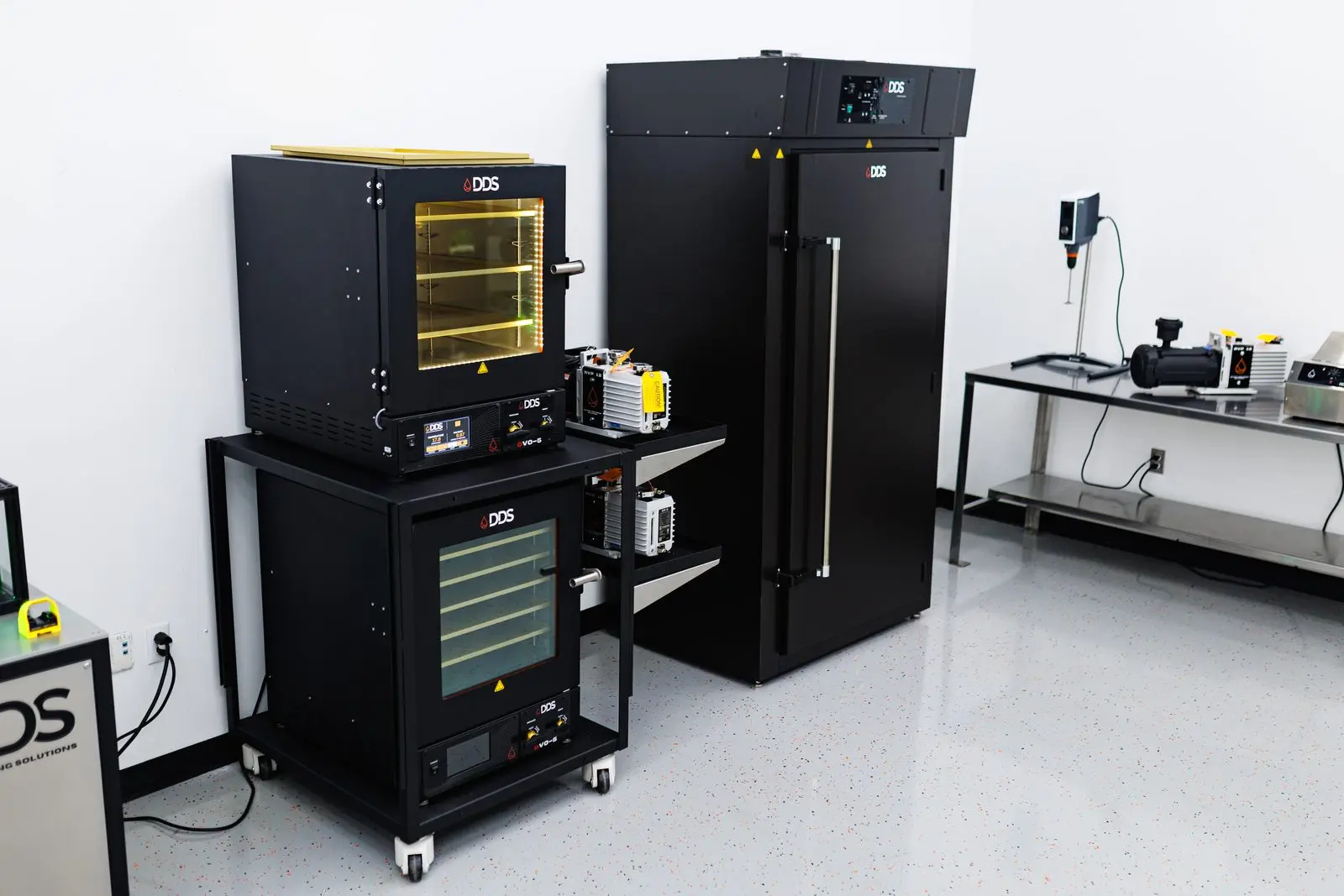
For most operations, the first priority is vacuum processing capability. Whether the goal is purging residual solvents, drying sensitive compounds, or post-processing concentrates, a reliable vacuum oven and pump combination is the foundation everything else is built on.
Choosing the right oven depends on throughput. The DVO-2 suits smaller operations or labs just starting out. The DVO-5 is the most common choice for mid-scale operations, offering 4.5 cubic feet of shelf space with consistent temperature stability. For production-scale processing, the DVO-10 provides 9.3 cubic feet and nine full-extension shelves designed for continuous operation.
The vacuum pump is equally important and often underspecified. Dry scroll pumps like the IDP series offer oil-free operation, low noise, and strong performance for operations that prioritize clean, low-maintenance workflows. For operations where upfront cost is a bigger factor, 2-stage rotary vane pumps deliver deep, stable vacuum across a range of applications.
A cold trap should be considered part of this initial investment rather than an add-on. Cold traps protect the vacuum pump from solvent contamination, extend pump life significantly, and improve overall system performance. Skipping one to reduce upfront cost is one of the most common and expensive mistakes operators make. For those looking to get everything in one go, DDS offers pre-configured vacuum oven packages that pair ovens, pumps, and cold traps together.
Add Decarboxylation Capacity
If the operation produces any products that require decarboxylation, dedicated decarb capacity should follow vacuum infrastructure as the next investment.
The DDO-28 is built specifically for high-capacity biomass decarboxylation and moisture removal. Its horizontal forced-air convection system and real-time humidity sensing deliver uniform results across every shelf. Running decarboxylation through a vacuum oven is a common workaround that creates bottlenecks at scale. Dedicated capacity solves that.
Then Dispensing and Filling Equipment
Once post-processing infrastructure is in place, the next priority is equipment that turns processed material into finished product. This is where the operation's specific product mix drives the decision entirely.
For concentrate production, the CDS-1000 automates concentrate dispensing at ambient temperature, handling everything from badder and butter to live rosin and sauce at up to 800 jars per hour. Ambient temperature dispensing preserves terpene profiles in a way that heated systems cannot.
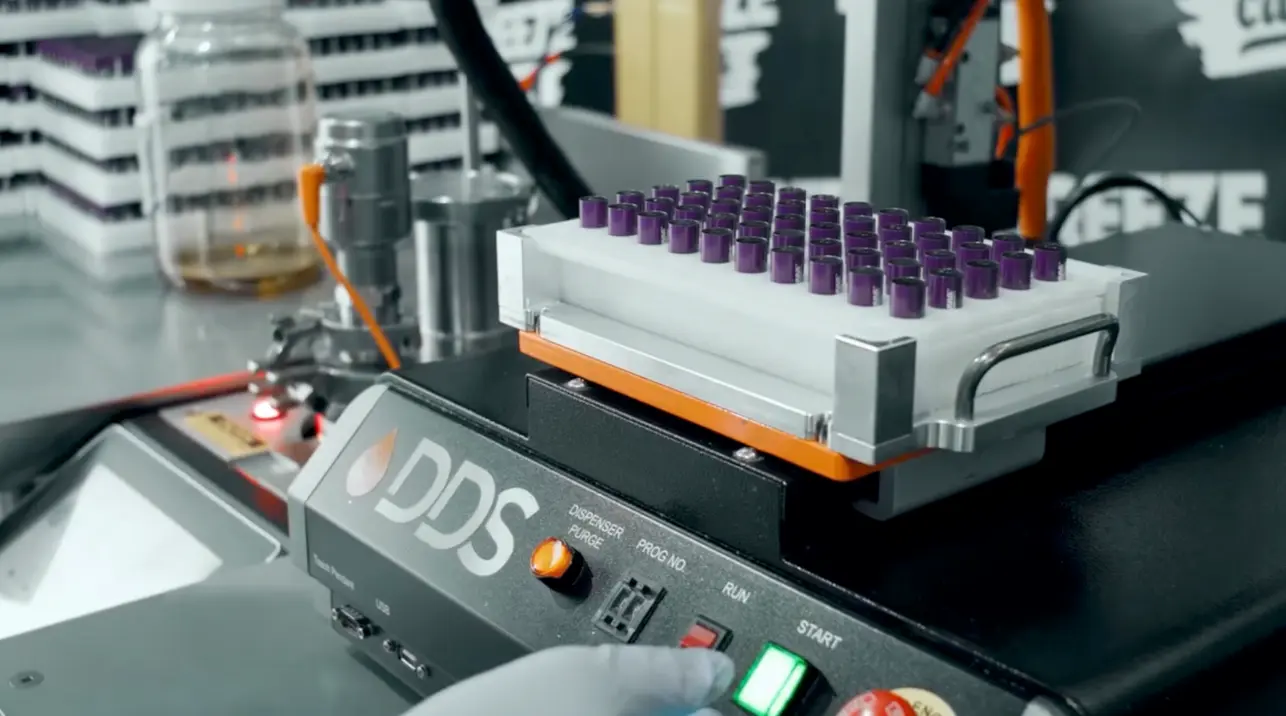
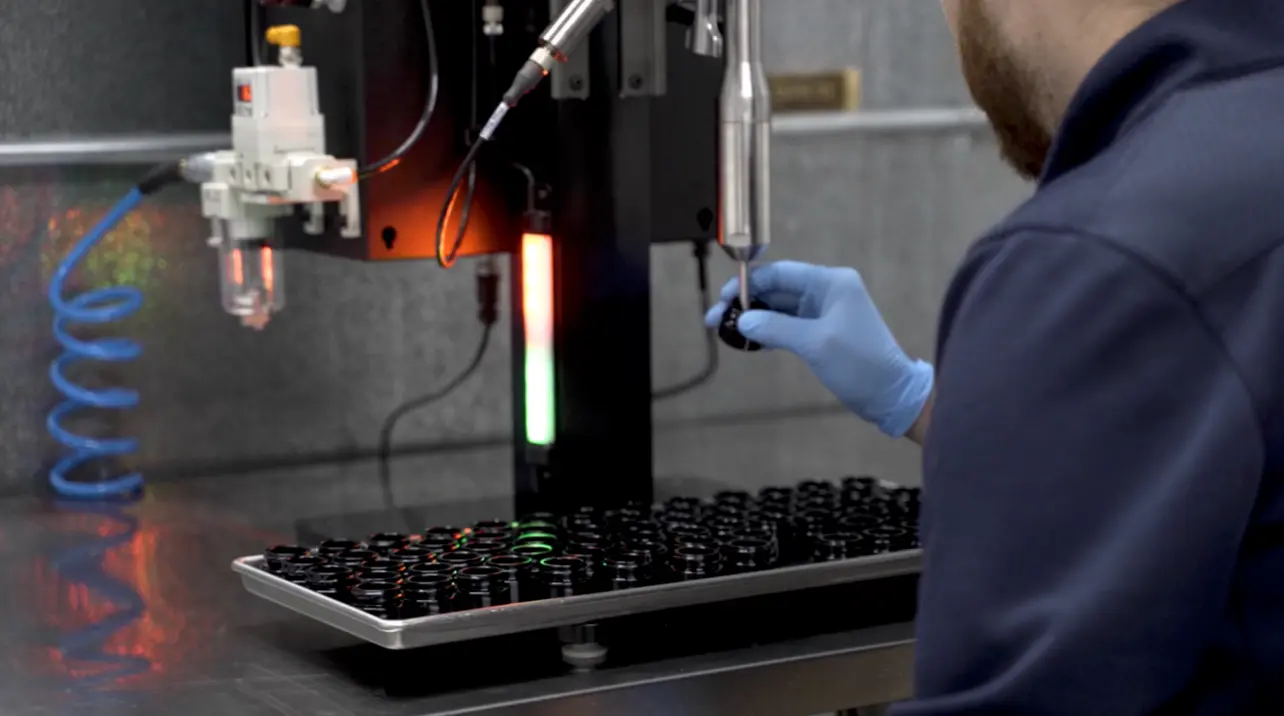
For vape cartridge operations, the choice comes down to whether capping automation is needed alongside filling. The CFM-1800 handles both filling and capping at up to 1,800 cartridges per hour. The CFS-1800 offers the same filling performance in a smaller footprint for operations that cap separately or are working with space constraints.
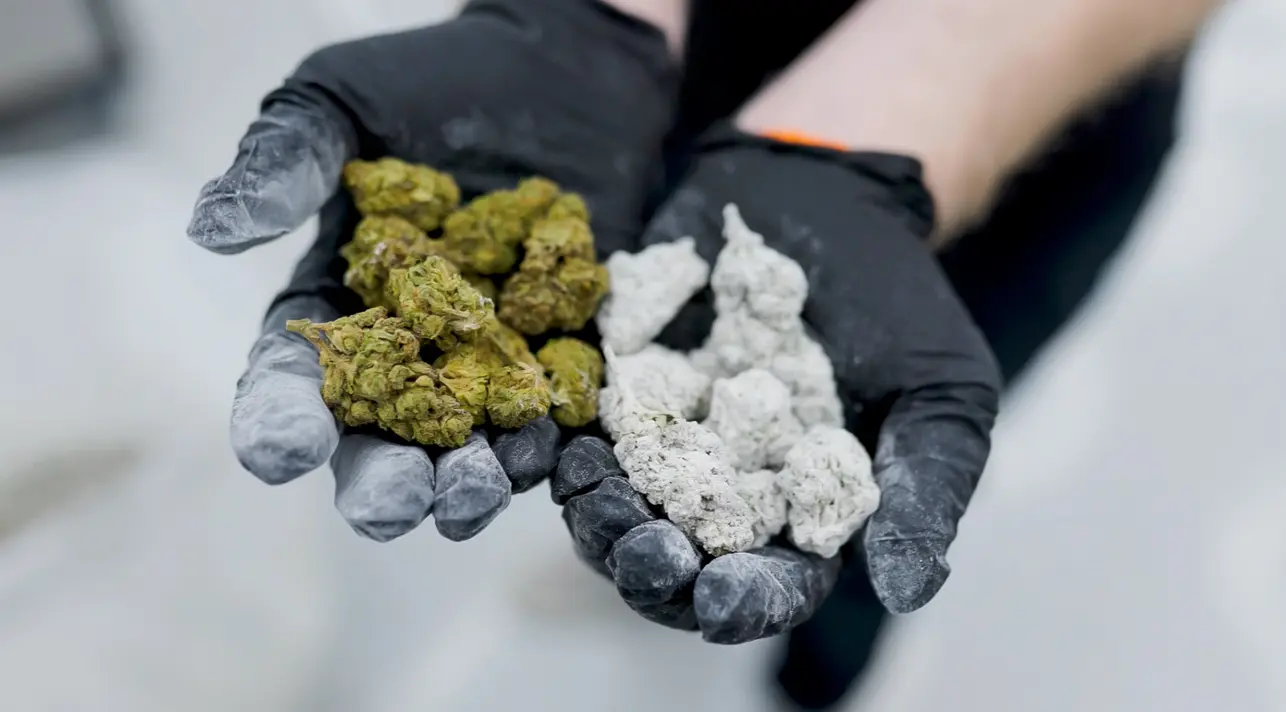
For operations producing infused flower or infused pre-rolls, the FX-8 processes up to 8 pounds of ground flower per 5-minute cycle with uniform atomization coverage. Infused pre-rolls are one of the fastest growing product categories in cannabis retail, and getting infusion infrastructure in place before it becomes a bottleneck is worth thinking about early.
Build in Stages, Not All at Once
Very few operations build out everything at once and that is fine. The framework above reflects a sensible order of priority: vacuum processing first, decarb capacity second, dispensing and filling third.
The most important thing is matching equipment capacity to actual production volume rather than anticipated volume. Underspecifying creates bottlenecks. Overspecifying ties up capital in equipment that sits underutilized. Knowing where the operation actually is today, and where it realistically needs to be in 12 to 18 months, is the right frame for every purchasing decision in this category.
Frequently Asked Questions
What equipment do I need to start cannabis post-processing?
The most foundational investment for most operations is a vacuum oven and pump combination. This covers solvent purging, drying, and concentrate post-processing. A cold trap should be added alongside the pump to protect it from contamination and extend its operational life.
What is the difference between a vacuum oven and a decarb oven?
Vacuum ovens are designed for solvent purging, drying, and stabilizing formulations under negative pressure. Decarb ovens like the DDO-28 are designed specifically for biomass decarboxylation and moisture removal using forced-air convection and humidity sensing. They serve different functions and most scaled operations eventually need both.
What is the difference between the DVO-2, DVO-5, and DVO-10 vacuum ovens?
The DVO-2 is a compact benchtop unit suited to small-scale or startup operations. The DVO-5 offers 4.5 cubic feet of shelf space and is the most common choice for mid-scale processing. The DVO-10 provides 9.3 cubic feet with nine full-extension shelves for production-scale workflows that require continuous operation.
Should I buy a scroll pump or a rotary vane pump for my vacuum oven?
Scroll pumps are oil-free, quieter, and lower maintenance, making them a strong choice for operations that run frequently and want to avoid oil changes and contamination risk. Rotary vane pumps are a cost-effective option that performs well across a wide range of applications. The right choice depends on your operating frequency, environment, and budget.
What is a cold trap and do I need one?
A cold trap sits between the vacuum oven and the pump, capturing solvents before they reach the pump. Without one, solvents accumulate in the pump oil, degrading performance and significantly shortening pump life. Most operations that skip a cold trap end up replacing pumps far sooner than expected. It is a worthwhile investment from the start.
When should I invest in automated dispensing or filling equipment?
When manual processing is creating inconsistency, consuming excessive labor, or limiting how much product you can move in a shift, it is time to evaluate automation. For concentrate operations approaching meaningful volume, the CDS-1000 is a practical starting point. For vape cartridge operations, the CFM-1800 or CFS-1800 makes sense when manual filling is the clear bottleneck.