Table of Contents
- What Does Automation Actually Mean in Cannabis Production?
- What Are the Real Costs of Manual Production?
- How Do You Calculate ROI on Cannabis Automation Equipment?
- What Operations Benefit Most from Automation?
- What Does DDS Automation Equipment Actually Produce?
- How Quickly Does Automation Pay for Itself?
- FAQs
If you are running a cannabis production operation and asking whether automation makes financial sense, you are asking the right question — and asking it at the right time. The answer depends less on the size of your operation and more on how you are currently producing and what that is costing you every shift.
This breakdown walks through how to think about automation ROI honestly, using real figures from DDS equipment.
What Does Automation Actually Mean in Cannabis Production?
Automation in cannabis production means replacing manual, repetitive tasks — filling cartridges by hand, jarring concentrates, infusing flower — with precision equipment that performs those tasks faster, more accurately, and with less labor.
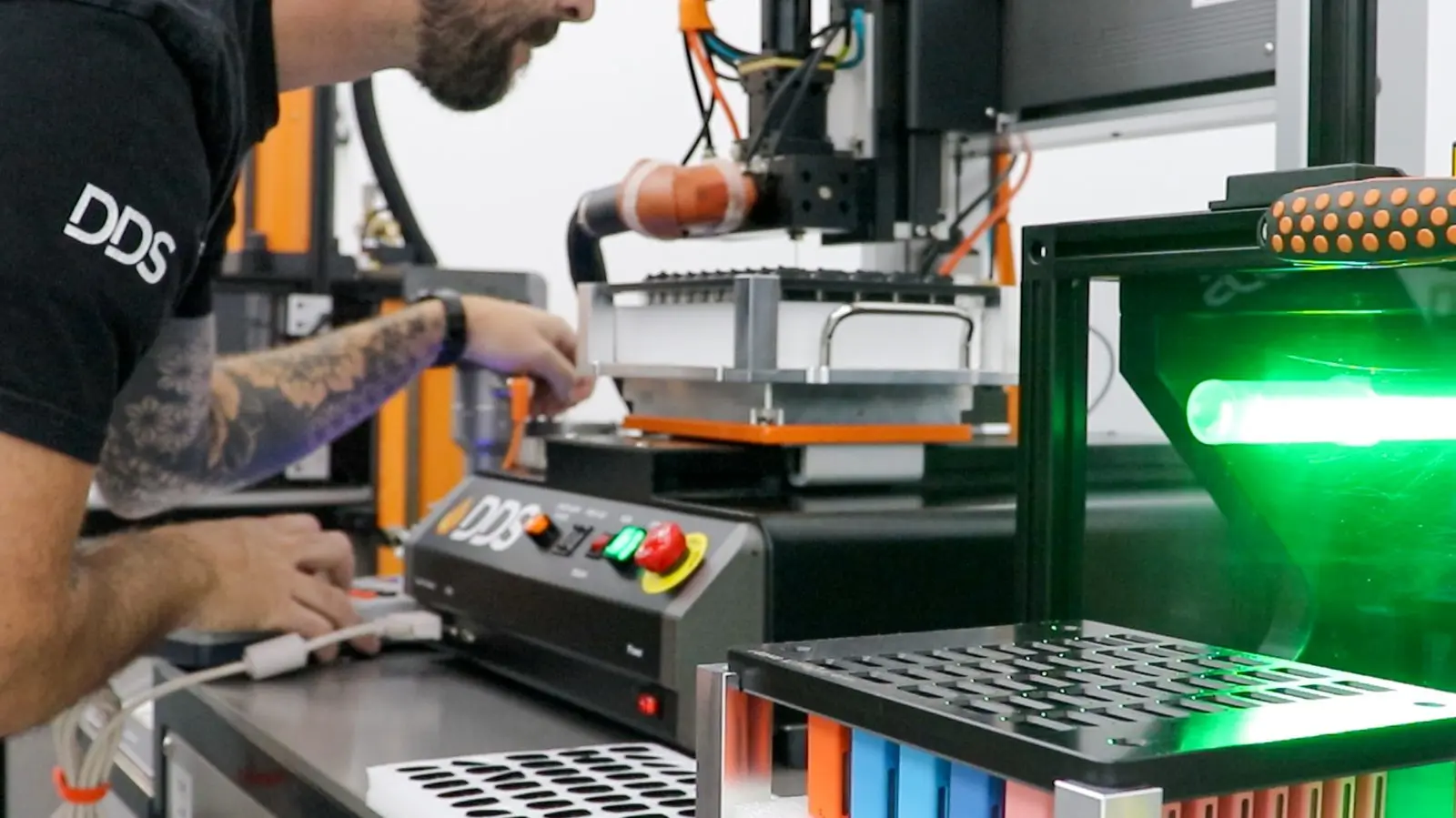
It does not mean eliminating your team. Every DDS system requires one operator to run at full capacity. What changes is what that operator can produce in a shift and how consistent that output is from batch to batch.
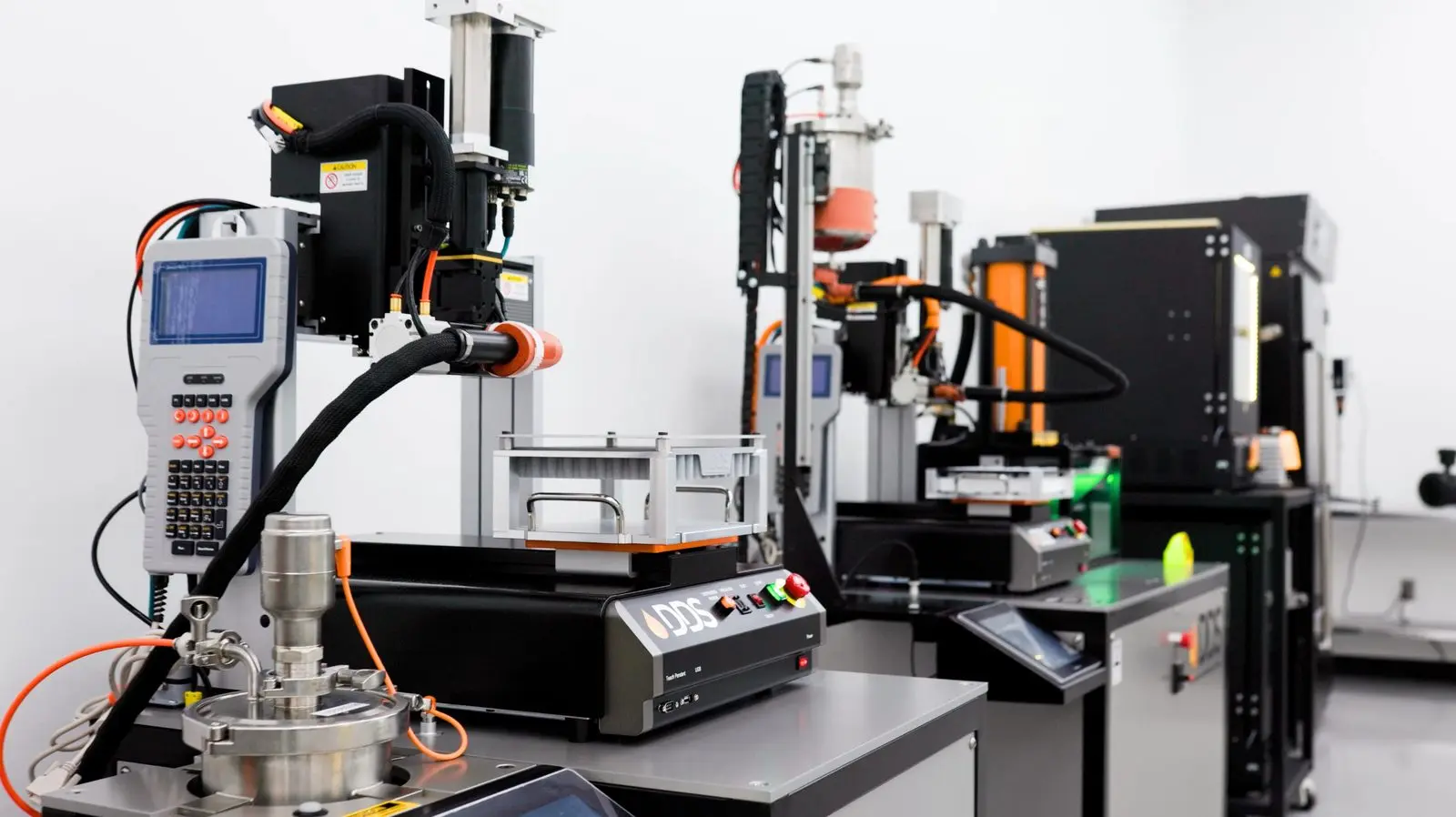
Detroit Dispensing Solutions designs and builds automated dispensing systems specifically for the cannabis industry, covering cartridge filling, concentrate dispensing, and flower infusion. Every system is engineered, manufactured, and supported in the USA.
What Are the Real Costs of Manual Production?
Manual production carries costs that are easy to underestimate because they are spread across labor, waste, inconsistency, and time rather than appearing as a single line item.
Labor is the most visible cost. Running multiple operators on a manual filling line to produce a few thousand units per shift is expensive in hourly wages and compounds over time as your operation scales.
Inconsistency is harder to see but equally costly. Manual filling introduces variability in fill weights that affects product quality, compliance, and consumer trust. Batches that fail testing or require rework represent real losses in time, material, and regulatory standing.
Throughput ceiling is the third constraint. A manual operation has a hard output limit set by the number of people you can staff and the hours they can work. Automation removes that ceiling.
How Do You Calculate ROI on Cannabis Automation Equipment?
ROI on automation equipment comes down to four factors:
Labor savings. How many operators does your current process require for a given output, and how does that compare to one operator on an automated system? The difference in hourly labor cost, multiplied across shifts and weeks, is your baseline savings figure.
Throughput gain. If automation allows you to produce more units in the same shift without adding staff, the additional revenue from that incremental output contributes directly to payback.
Waste reduction. Automated systems with ±1% dosing accuracy reduce material waste compared to manual filling. Over time, across thousands of units, that adds up.
Equipment cost comparison. If replacing multiple manual filling setups with a single automated machine reduces your total equipment cost, that differential is part of the ROI calculation from day one.
The simplest version of the calculation: take your current daily labor cost for the filling operation, subtract the labor cost with one operator on an automated system, and divide the equipment investment by that daily savings figure. That gives you a baseline payback period in days, which you can convert to months.
What Operations Benefit Most from Automation?
Not every operation is at the same stage, and the ROI calculation looks different depending on where you are.
High-volume cartridge operations see the clearest and fastest ROI. If you are producing thousands of units per day across multiple operators, the gap between manual output and the CFM-1800's 1,800 cartridges per hour is significant enough to justify the investment quickly.
Concentrate producers jarring badder, rosin, and other formats manually face similar labor intensity and consistency challenges. The CDS-1000 processes up to 800 jars per hour with ±1% dosing accuracy at ambient temperature, handling the full viscosity range without heat.
Infused pre-roll operations can benefit from the CFM-1800 or CFS-1800 beyond just cartridge filling — both systems switch to pre-roll infusion mode at up to 1,500 units per hour with a needle swap and preset programming.
Growing operations at earlier stages benefit from locking in automation before manual processes become entrenched. Scaling a manual operation requires hiring. Scaling an automated one does not.
What Does DDS Automation Equipment Actually Produce?
These figures come directly from DDS product specifications:
CFM-1800 Cartridge Filling and Capping Machine Up to 1,800 vape cartridges per hour, filled and capped, with ±1% dosing accuracy. One operator. Low-temperature dispensing at 50°C. Compatible with distillate, live resin, and other high-viscosity formulations. Integrated hydro-pneumatic capping press delivering 30,000+ lbs of force, maintenance-free.
CFS-1800 Cartridge Filling System Up to 1,800 vape cartridges per hour or 1,500 pre-rolls per hour with ±1% dosing accuracy. Same proprietary valve technology as the CFM-1800 without the integrated capping press — for operations handling capping separately or needing maximum workflow flexibility.
CDS-1000 Concentrate Dispensing System Up to 800 concentrate jars per hour with ±1% dosing accuracy at ambient temperature (68 to 72°F). Handles badder, butter, sugar, live rosin, cured rosin, live resin, sauce, and other cannabis concentrate formats. One operator. Pharmaceutical-grade progressive cavity pump.
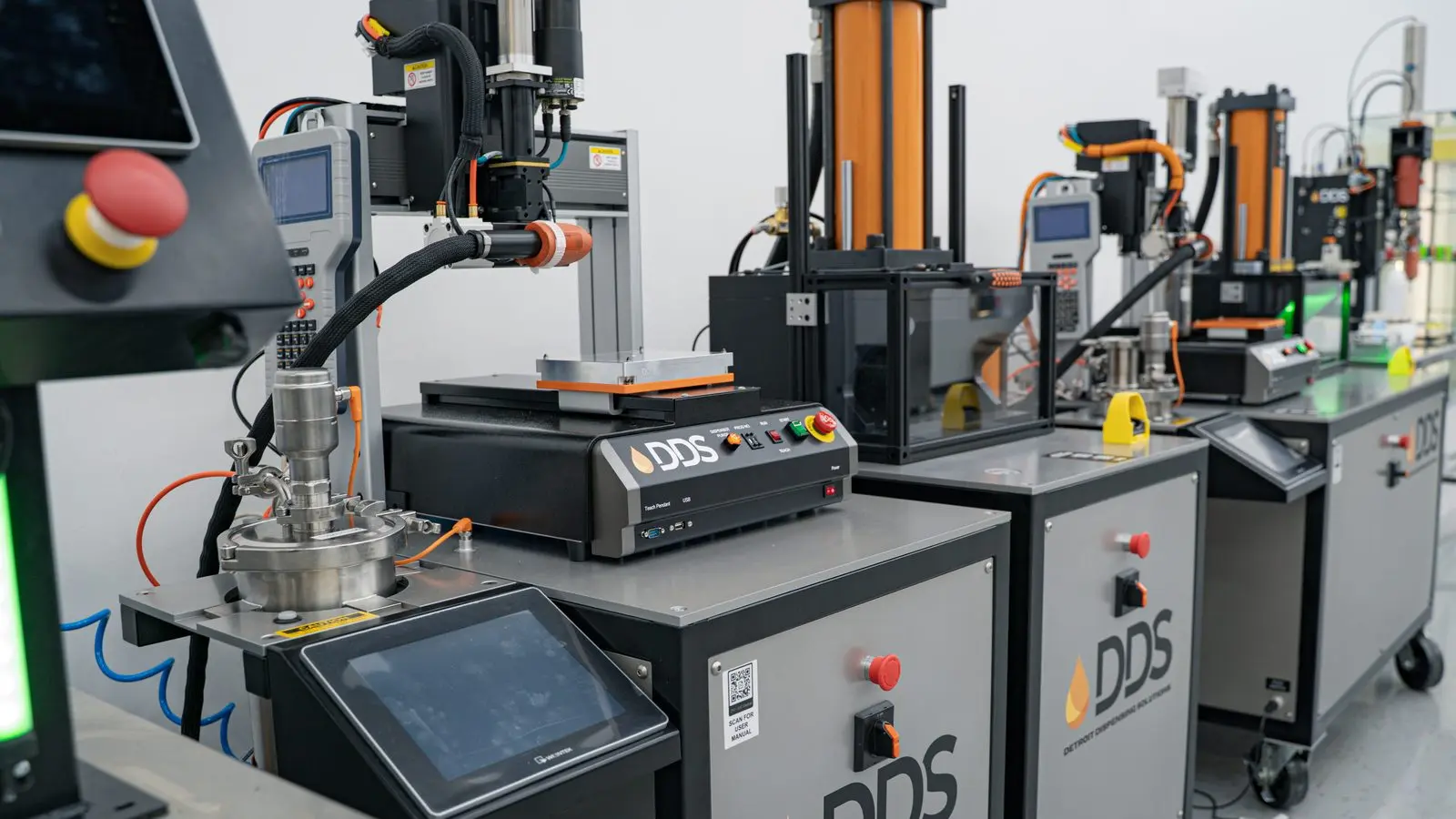
All three systems ship with professional installation, operator training, and ongoing technical support, and are backed by a one-year warranty.
How Quickly Does Automation Pay for Itself?
Payback period varies by operation, but the structure of the calculation is consistent: compare your current labor, throughput, and equipment costs against a more efficient system.
Take a typical vape cartridge-filling setup. Many operations run multiple manual or semi-automated units with several operators to produce around 9,000 cartridges per shift. Systems in this category often represent a total investment in the $90K–$130K range. By consolidating into a single automated solution like the CFM-1800, operators can maintain the same daily output with just one operator. The result: lower upfront equipment complexity, fewer labor hours per shift, and a streamlined workflow that continues to generate savings over time.The reduction in equipment cost alone represents approximately 34% savings upfront, and the daily labor savings compound from there.
For concentrate production, similar efficiencies apply. Automated dispensing systems in the $50K–$70K range can replace manual jarring processes that are slower, inconsistent, and labor-intensive. Best-in-class solutions like the CDS-1000 are engineered for precision, consistency, and throughput at scale, helping operators standardize output while reducing operator strain and variability. For premium products like live rosin, the added benefit of improved consistency and terpene preservation—while harder to quantify—can have a meaningful impact on product quality and brand perception.
The honest answer is that payback period depends on your current labor costs, shift structure, and production volume. The DDS team offers free process consultations specifically to model this for your operation. Get in touch here.
FAQs
Is automation only worth it for large operations?
Not necessarily. The ROI case is strongest when you have recurring labor costs tied to manual production, regardless of total scale. An operation producing a few thousand units per shift with two or three manual operators can see meaningful payback on an automated system. The key is running the numbers for your specific labor cost and output.
How many operators does DDS equipment require?
Every DDS dispensing system — the CFM-1800, CFS-1800, and CDS-1000 — requires one operator to run at full production capacity.
What is the dosing accuracy of DDS systems?
All three dispensing systems deliver ±1% dosing accuracy. For cartridge filling that means consistent fill weights across every unit. For concentrate jarring it means repeatable package weights that support compliance and reduce waste.
Can one machine handle multiple product formats?
Yes. The CFM-1800 and CFS-1800 both support vape cartridges, pods, disposables, all-in-ones, pre-rolls, and syringes via a custom jig system. The CDS-1000 handles the full range of cannabis concentrate viscosities from badder and butter to live rosin and sauce.
What happens if the equipment needs service?
All DDS systems are built with modular components specifically to minimize downtime. Component replacement does not require specialized tooling or extended maintenance windows. DDS also provides ongoing technical support as part of every purchase. More detail on support is available on the DDS FAQ page.
Does automation affect product quality?
It generally improves it. Manual filling introduces operator-to-operator variability in fill weights and is more susceptible to temperature inconsistency. DDS systems fill at precisely controlled low temperatures — distillate at 50°C on the CFM-1800 and CFS-1800, and at ambient 68 to 72°F on the CDS-1000 — preserving terpene profiles and maintaining consistency across every batch.
What if my operation is still growing and I am not sure about volume yet?
DDS offers free process consultations to help evaluate where automation fits your current stage and where it makes sense to invest first. There is no obligation. Contact the team here.
Is there a way to model the ROI for my specific operation before committing?
Yes. DDS has built an ROI calculator for the CFM-1800 specifically to model payback period against your current labor costs and production volume. Contact the DDS team to access it or discuss your numbers directly.
What kind of support comes with the equipment?
Every DDS system includes professional installation, operator training, a one-year warranty, and ongoing technical support. The DDS team is available for remote troubleshooting and can ship replacement parts with fast turnaround. Full details on the FAQ page.
Ready to run the numbers for your operation? Request a free process consultation with the DDS team.