Live resin is prized for its rich terpene profile and full-spectrum cannabinoid content, but that same complexity makes it notoriously difficult to fill into cartridges reliably. If the process isn’t carefully managed, manufacturers risk significant loss in potency, flavor, and yield. Here’s a breakdown of the key challenges and how purpose-built solutions make all the difference.
1. High Viscosity That Resists Flow
Live resin is thick, sticky, and can be likened to cold raw honey. As terpenes evaporate and solvents are purged, viscosity climbs steeply, making it hard for standard pumps to move without excessive heat or mechanical force.
This elevated thickness often results in inconsistent flow rates and clogging at ambient temperatures. Many systems ramp up heat to chase flow, but that comes at a steep cost. Overheating live resin can quickly degrade its terpene profile, reducing aroma, bioactivity, and overall quality.
2. Thermal Damage to Terpenes
Overheated resin doesn’t just flow better but it also loses more of its most valuable compounds. Terpenes begin to degrade or evaporate at temperatures as low as 60°C, especially during prolonged exposure. Some systems even reach 70°C to force consistency; at that point, you’re compromising flavor and full-spectrum potency.
3. Pressure or Vacuum Stress
Pneumatic or vacuum-based systems may push resin forward, but they often introduce additional risks. Sudden pressure changes can lead to oxidation, introduce air pockets, or worsen terpene loss—especially with delicate live-resin formulations. Vacuum, in particular, can heat the product unintentionally due to reduced boiling points, creating localized damage.
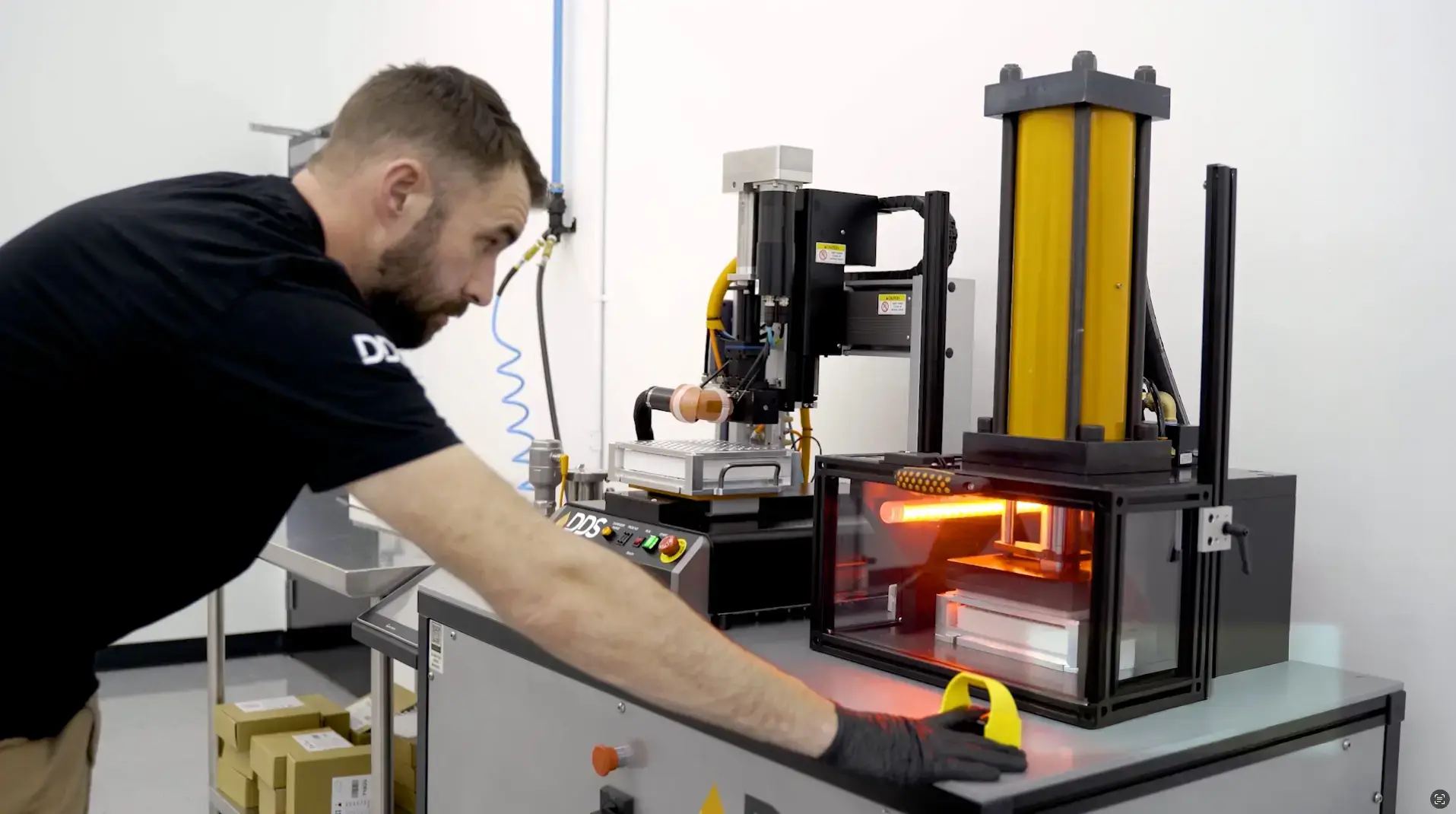
4. Inconsistent Dose Accuracy
Standard volumetric systems don’t account for density differences—live resin can vary wildly from batch to batch. Without weight-based or displacement-calibrated systems, you’ll likely see inconsistent doses, leading to inaccurate product volumes, reduced potency, and regulatory concerns. Systems that use check valves or time delay approaches to measure fluid volume struggle to maintain accuracy with these complex (and often varying) viscosities of live resins.
Better Approaches for Live Resin Filling
A. Positive Displacement (Mechanical) Pumps
These systems push resin gently and precisely using pistons or plungers, not heat. By moving resin mechanically, they preserve terpene integrity and prevent thermal degradation—maintaining its character and effects while delivering repeatable fills. Having independent control of fluid measurement speeds and rod acceleration allows these pumps to gently measure resins (quickly) without introducing air bubbles into product, maintaining high-end visual appearances in filled devices.
B. Localized Low Heat and Real-Time Thermal Controls
Instead of bulk heating, the most effective systems apply gentle, targeted heat, just enough to maintain flow without compromising the compound. Real-time temperature monitoring ensures consistency and avoids runaway heat that could degrade terpenes. Monitoring the actual material temperature as it flows—not just the heater temperature—helps preserve product integrity and prevents accidental terpene loss. This results in a system that can run 10-20°C cooler than other dispensing approaches.
C. Weight-Based Calibration (Not Just Volume)
Live resin’s density can vary more than distillate. Systems that calibrate by weight not just volume—adjust on the fly for each batch’s density profile, ensuring each cartridge has the correct dosing even when formulations differ. Relying on weight-based dosing can risk overfilling hardware, which may cause leaks or defective devices.
D. Precision, Modular Cartridge Fillers
Look for cartridge fillers designed to handle viscous cannabis concentrates, with features like quick-cleaning valves, modular components for easy maintenance, and intuitive calibration. These eliminate downtime, reduce product waste, and maintain terpene profiles by minimizing thermal stress.
Fact-Based Filling Pays Off
Operators using methods like superheating or pneumatic systems may see faster fills but at the cost of reduced terpene content, unpredictable dosing, and increased waste. By contrast, mechanical displacement with precise heat and dosing delivers consistency and preserves the full live-resin experience.
Growing consumer awareness of strain-specific flavor and effects means real differentiation begins at extraction and continues through filling. If you’re producing live resin, the right tools make all the difference. Purpose-built technology ensures accurate dosing, terpene preservation, and scalability as demand grows. Detroit Dispensing Solutions designs filling machines specifically for cannabis concentrates like live resin. With advanced temperature control, positive displacement pumps, and ±1% fill accuracy, our systems are built to handle the unique challenges of viscous, terpene-rich oils. Contact DDS today to learn how our filling solutions can help you protect quality while scaling production.