Cannabis concentrates aren't one-size-fits-all. From thick, sticky live rosin to clear, syrupy distillate, each product type presents unique challenges for processing and packaging. Understanding cannabis viscosity and how to handle different concentrate consistencies is essential for manufacturers scaling production while maintaining product quality and operational efficiency.
Understanding Cannabis Concentrate Viscosity
Viscosity in cannabis concentrates varies significantly, distillate tends to have a thicker viscosity, while live resin and live rosin can range from medium to thick consistency. This variation isn't just about texture, it directly impacts filling equipment requirements, temperature control needs, and ultimately product quality.
Cannabis oil viscosity can range dramatically, with some concentrates measuring up to 300,000 cP (centipoise) at 15°C. To put this in perspective, honey measures around 10,000 cP, making some cannabis concentrates 30 times thicker than honey.
Temperature dramatically affects viscosity. Viscosity increases as temperature decreases and decreases as temperature rises. This relationship becomes critical during dispensing operations: too cold and concentrates won't flow; too hot and valuable terpenes degrade.
The Major Concentrate Types and Their Challenges
Distillate: The High-Viscosity Standard
Cannabis distillate is a highly refined oil containing 90-99% pure cannabinoids like THC or CBD, resulting in a clear, viscous substance. The thick consistency of distillate makes it thick and syrupy, often requiring heating to thin it out for filling operations.

Dispensing Challenges:
- High viscosity requires careful temperature control to maintain flowability
- Risk of equipment clogging with inadequate heating systems
- Overly thick oils can clog filling needles, pumps, and transfer lines, requiring frequent cleaning cycles
Advantages:
- Long shelf life and high potency make distillate ideal for precise dosing applications
- Odorless and tasteless profile allows flexibility in product formulation
Live Resin: The Terpene-Rich Challenge
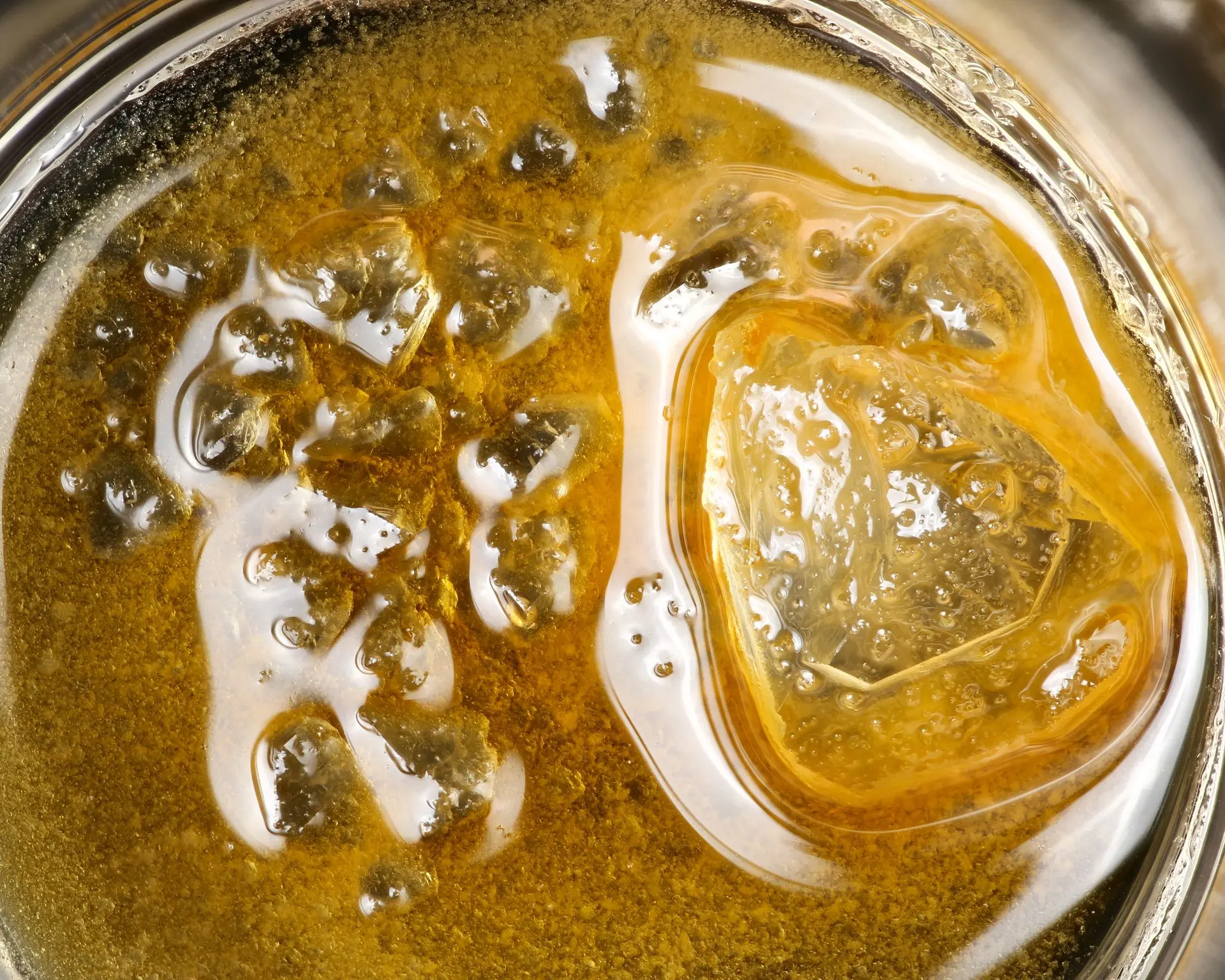
Live resin is a full-spectrum extract made from fresh frozen cannabis plant material, preserving cannabinoids, terpenes, waxes, fats, and lipids. Live resin products are available in various consistencies including "sauce," "badder," "wax," and others, typically appearing opaque and light yellow to amber in color.
Dispensing Challenges:
- Live resins and "sauces" undergo significant viscosity changes with temperature fluctuations, requiring optimal temperature maintenance throughout filling to prevent waste
- Terpenes are highly volatile and can quickly evaporate during filling if temperatures aren't carefully controlled
- Products like sugar concentrates and sauce can separate during filling and need constant stirring to keep cannabinoids and terpenes evenly distributed
Advantages:
- Rich aroma and flavor shaped by preserved terpene profiles
- Cannabis content ranges from 40-90% THC while retaining minor cannabinoids and full-spectrum benefits
Live Rosin: The Solventless Premium
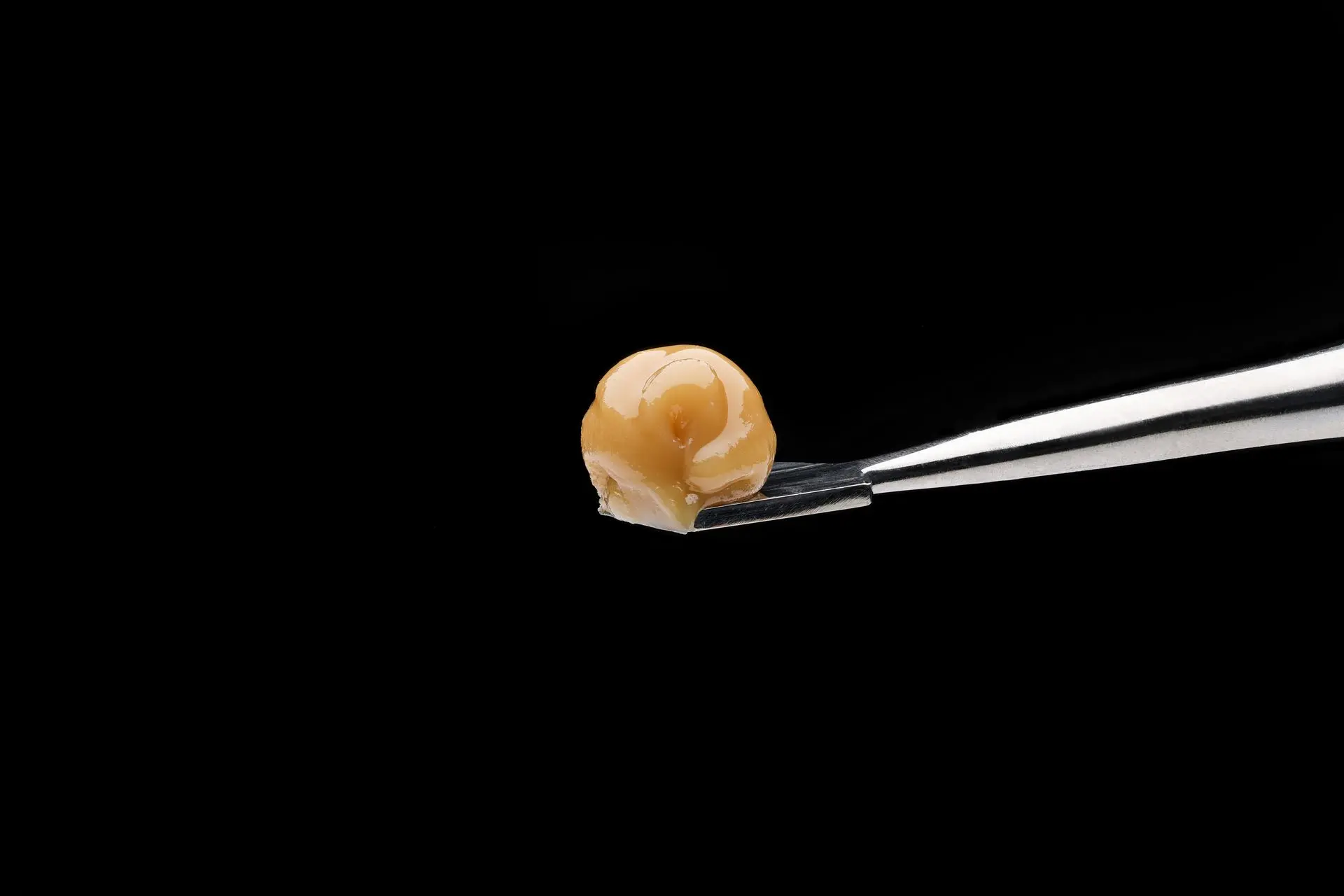
Live rosin is made by applying pressure and heat to cannabis, hash, or kief without any solvents, making it one of the market's rarer and more expensive products. It's considered less toxic than other concentrates and maintains much of the plant's aromas and terpenes.
Dispensing Challenges:
- Wide viscosity range from thick sauce to near-solid consistency
- Maintaining homogeneity during filling becomes particularly challenging during large production runs
- Temperature sensitivity requires precise control to prevent terpene degradation
Advantages:
- Provides more depth and dimension than other concentrates, making it the cannabis connoisseur's choice
- No solvent residue concerns
Equipment Requirements for Multi-Viscosity Handling
Successfully processing multiple concentrate types requires equipment designed for versatility. Improper viscosity management disrupts automated filling systems' flow rates, causing irregular dispensing patterns, production delays, waste, and inconsistent fill levels.
Critical Features for Versatile Dispensing
Pharmaceutical-Grade Pumps: The CDS-1000 from Detroit Dispensing Solutions uses a pharmaceutical-grade progressive cavity dosing pump specifically engineered for cannabis concentrates. Its low-shear rotor and stator design ensures smooth, consistent dosing even with high-viscosity or particulate-rich concentrates while minimizing pulsation and turbulence that can degrade terpenes.
Traditional pressure pot feed systems that rely on compressed air can cause issues with thick concentrates. The CDS-1000 uses a precision tube-and-plunger feed mechanism that maintains even pressure throughout the batch, preserving product homogeneity and quality from start to finish.
Ambient Temperature Operation: Unlike systems requiring significant heating, the CDS-1000 operates at 68-72°F. Dispensing at ambient temperatures preserves delicate concentrate properties, maintains terpene integrity, and ensures consistent results with every jar.
This is crucial because balancing temperature is essential—too warm can degrade valuable terpenes while too cold prevents proper flow.
Precision Dosing Accuracy: The CDS-1000 delivers ±1% dosing accuracy thanks to its smooth-flow pump and precision plunger feed system, filling even the most viscous concentrates consistently while preserving flavor, potency, and batch homogeneity.
For comparison, manual filling methods often achieve only ±3-5% accuracy, resulting in product giveaway that directly impacts profitability.
Solving the Density Challenge
One often-overlooked aspect of cannabis viscosity is density variation. While positive displacement pumps measure doses volumetrically, the cannabis industry requires package weight, not volume.
The CDS-1000 addresses this through batch calibration. Operators dispense 1 mL of product, weigh it, and enter the weight into the touchscreen. The system then calculates actual material density and automatically adjusts dispense volume to match the target weight. This ensures accurate, weight-based dosing across all concentrate types.
Production Efficiency Across Concentrate Types
The CDS-1000 fills up to 800 concentrate jars per hour with ±1% dosing accuracy while handling the full spectrum of cannabis concentrate viscosities from badder and butter to sugar and cold-cured rosin.
This versatility means manufacturers don't need separate equipment for each product type. Whether producing live rosin, cured resin, or distillate-based products, a single system adapts to different viscosities without compromising accuracy or speed.
Key Operational Benefits:
- Tool-free cleaning and fast changeover minimize downtime between batches or SKUs, boosting production flexibility
- Modular design allows quick component replacement if issues arise
- Touchscreen controls simplify batch setup and real-time adjustments
For vape cartridge applications, Detroit Dispensing Solutions offers the CFM-1800 and CFS-1800 systems. Both use the same precision dispensing technology with low-temperature filling capabilities that preserve product integrity across different concentrate viscosities.
Best Practices for Multi-Viscosity Operations
Material Characterization: Before filling, test each concentrate type at different temperatures to understand its flow characteristics. Testing samples in various conditions prepares you for what end users will experience in different environments.
Temperature Monitoring: Proper viscosity management ensures even heating and vaporization, prevents inadequate delivery and overheating, and avoids clogging from too-thick oil or leaking from too-thin mixtures.
Homogeneity Verification: Inadequate viscosity can result in poor homogenization of cannabinoids, terpenes, and carriers, leading to degradation and inconsistent potency throughout the batch. Regular testing ensures consistent product quality.
Equipment Selection: Choose systems designed specifically for cannabis concentrates rather than repurposed food or pharmaceutical equipment. Cannabis-specific engineering accounts for the unique challenges of terpene preservation, high-viscosity materials, and stringent compliance requirements.
The Bottom Line
Cannabis concentrate diversity continues expanding as consumer preferences evolve toward full-spectrum, terpene-rich products. Manufacturers need equipment capable of handling this variety without sacrificing accuracy, throughput, or product quality.
As legal consumers grow and mature, so do their tastes, desired experiences, and demand for high-quality products. Operations that invest in versatile, precision-engineered dispensing systems position themselves to meet these evolving demands while maintaining operational efficiency.
The CDS-1000 from Detroit Dispensing Solutions was specifically designed to address the multi-viscosity challenge facing cannabis processors. From thick rosin to flowing sauce, it delivers consistent accuracy at room temperature—preserving terpenes, reducing waste, and scaling with your production needs.