Table of Contents
- Why a cartridge filler is a starting point, not a finish line
- What bottlenecks appear once cartridge filling is automated?
- How does concentrate dispensing fit into a scaled operation?
- Where does flower infusion come in as a brand grows?
- What role does post-processing equipment play in a full automation stack?
- How do DDS systems work together as a production stack?
- What does scaling the stack actually look like in practice?
- FAQs
Why a cartridge filler is a starting point, not a finish line
For most cannabis operations, the first major automation investment is a cartridge filler. The labor savings are immediate, the throughput gains are measurable, and the ROI case is straightforward. But the moment filling is automated, a pattern emerges: the constraints that were previously invisible become obvious. Concentrate jarring is still manual. Flower infusion is still manual. Post-processing may still be a bottleneck. The cartridge filler did its job — and in doing so, it revealed where the next problems are.
This is the nature of building a production operation at scale. Automation in one area shifts pressure to others. Operators who understand this from the beginning approach their first equipment investment differently: not as the solution, but as the foundation.
DDS designs its equipment lineup with this in mind. The CFM-1800 and CFS-1800 are built to integrate with the rest of the stack, not operate in isolation. The same design philosophy applies across the CDS-1000, the FX-8, and the ancillary equipment lineup.
What bottlenecks appear once cartridge filling is automated?
The most common bottleneck that surfaces after cartridge filling is automated is the concentrate supply chain feeding the filler. A system capable of filling 1,800 cartridges per hour can only operate at capacity if the team can keep it supplied with properly prepared, accurately measured oil. If that oil is being pulled from jars weighed by hand, measured by eye, or transferred manually, the filler will regularly sit idle waiting on upstream processes.
Packaging and capping are another common reveal. Operations using the CFS-1800, which handles filling without an integrated press, may find that a manual capping step becomes the throughput ceiling as fill volume scales. The CFM-1800 integrates filling and capping in a single system, which removes that particular constraint for operations that choose it from the start.
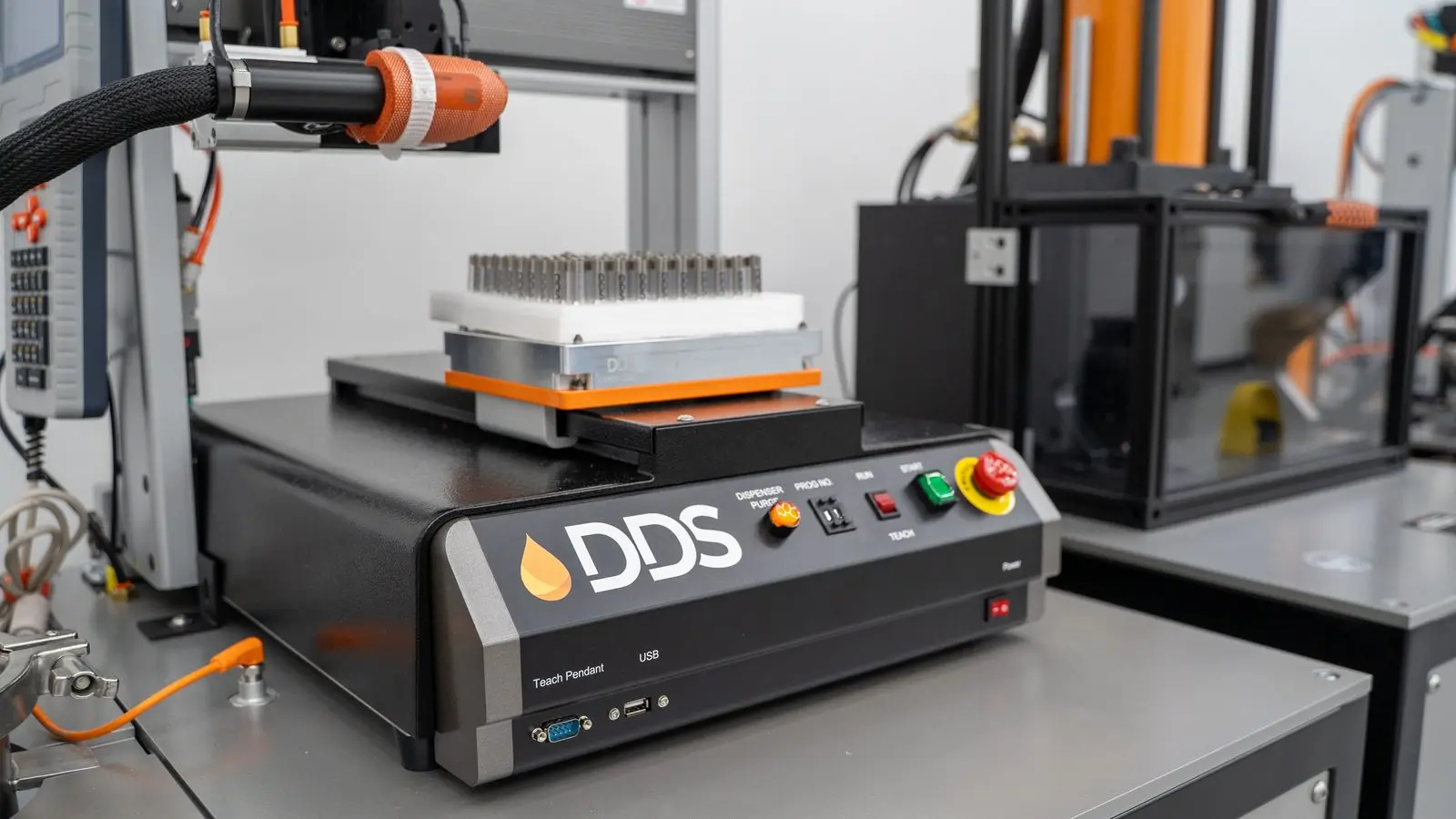
Beyond those immediate bottlenecks, growing brands typically find that their SKU count expands. Cartridges lead to pre-rolls. Pre-rolls lead to infused pre-rolls. Cartridges for one market lead to concentrate jars for another. The production floor evolves, and equipment purchased to solve one problem gets pulled into workflows it was not designed to handle.
How does concentrate dispensing fit into a scaled operation?
The CDS-1000 addresses the concentrate jarring side of production that cartridge-focused operations frequently neglect until volume forces the issue. Dispensing badder, live rosin, sauce, or butter into retail jars manually is slow, inconsistent, and physically demanding. At low volume it is manageable. At the output levels that follow automated cartridge filling, it becomes a serious production constraint.
The CDS-1000 fills up to 800 concentrate jars per hour at ambient room temperature between 68 and 72°F with ±1% dosing accuracy, using a pharmaceutical-grade progressive cavity pump that handles the full viscosity range from thin sauce to thick cold-cured rosin. One operator runs it at full capacity. For brands producing both vape cartridges and jarred concentrates, adding the CDS-1000 means both product lines can scale without one throttling the other.
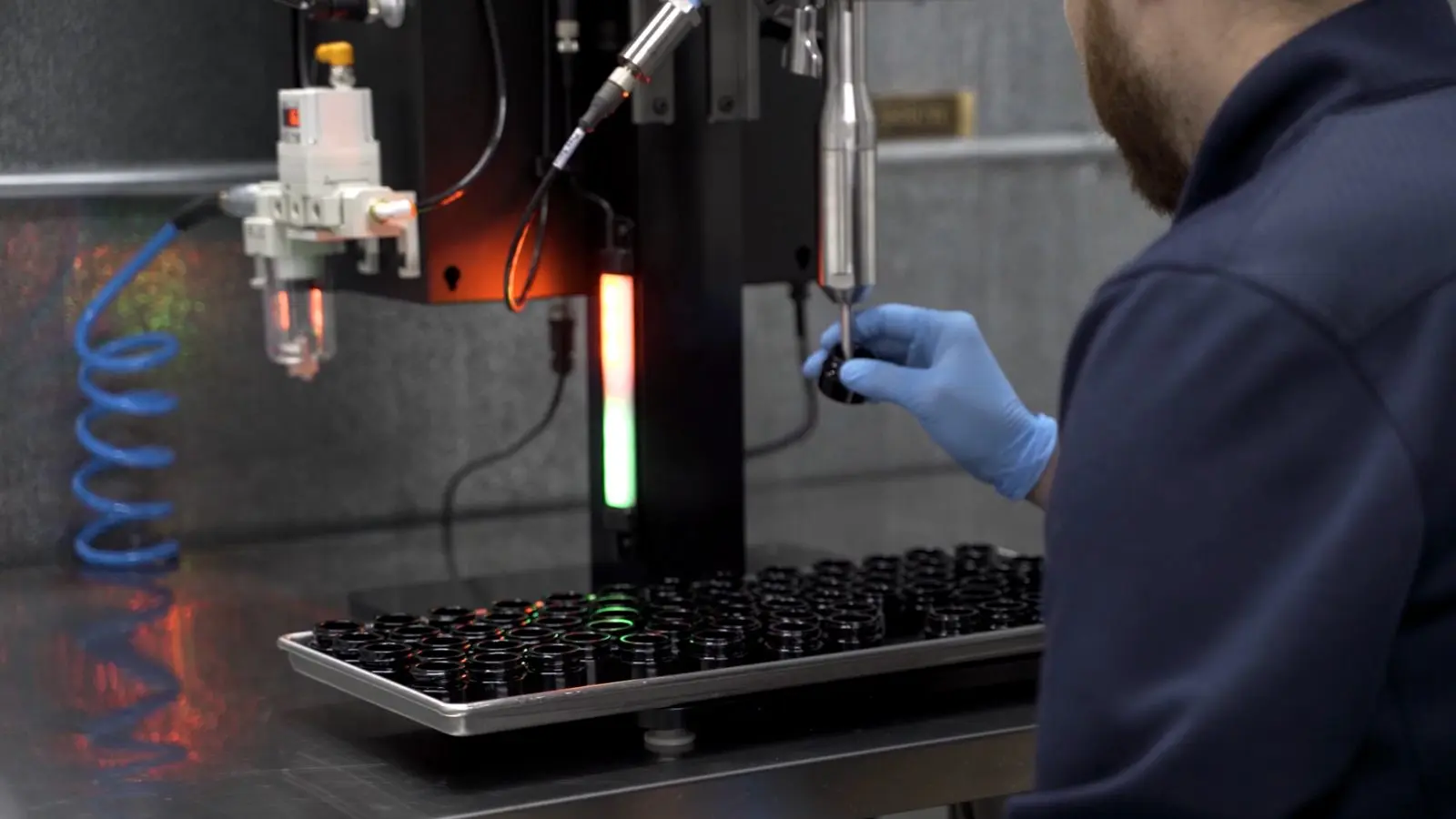
Detour Cannabis, one of DDS's partners, runs the full CFM, CFS, and CDS lineup and describes the decision as straightforward: "each system has exceeded our expectations in terms of precision, reliability, and throughput."
Where does flower infusion come in as a brand grows?
Infused pre-rolls have become one of the fastest-growing product categories in cannabis. As brands that started with vape cartridges expand their SKU count, infused pre-rolls are a frequent next step…high margin, high consumer demand, and compatible with the same concentrate materials already flowing through the operation.
The FX-8 is DDS's industrial flower infusion system, processing up to 8 lbs of flower per 5-minute cycle with precision atomization that delivers uniform coverage across ground flower and whole buds without clumping or oversaturation. It handles distillate, live resin, live rosin, kief, and THCa, and produces flower that is compatible with downstream pre-roll machinery.
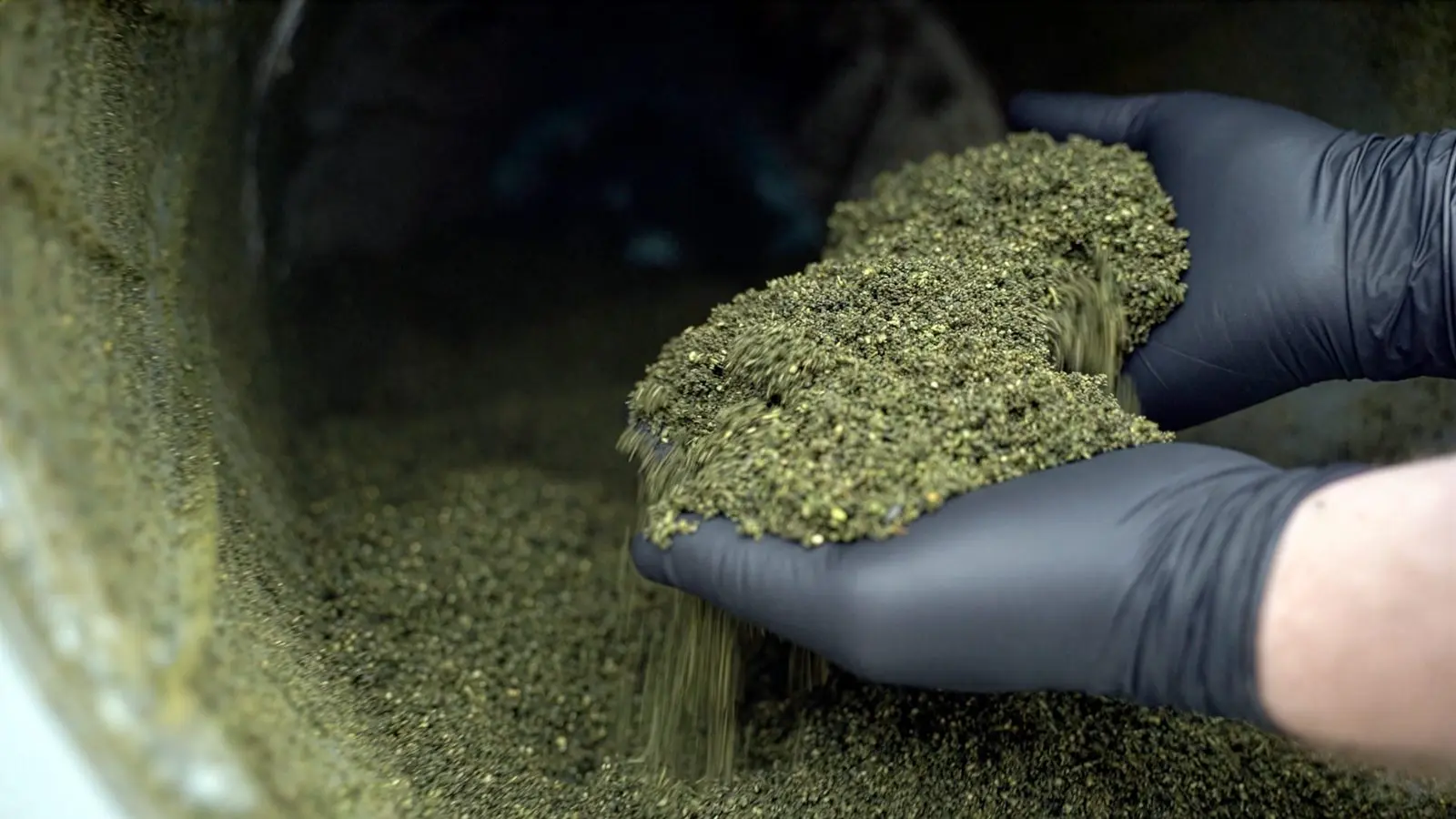
For operations already running the CFM-1800 or CFS-1800 for cartridge filling, adding the FX-8 means the same team and the same concentrate supply can now produce a second product format without rebuilding the production floor. The two workflows complement each other rather than compete for resources.
What role does post-processing equipment play in a full automation stack?
Post-processing often gets treated as a background function rather than a production bottleneck, but as extraction output grows, a vacuum oven that cannot keep pace with purge demand will constrain everything downstream of it. Purge cycles that run overnight, multiple sequential loads to service a single extraction batch, and inconsistent test results across batches are all indicators that post-processing has become the constraint.
DDS offers a range of vacuum ovens through the ancillary equipment page, from the compact DVO-2 for small-scale labs through the mid-tier DVO-5 and up to the production-scale DVO-10 at 9.3 cu. ft. For operations running pre-extraction biomass decarboxylation, the DDO-28 handles that workflow at high capacity with forced-air convection and real-time humidity sensing.
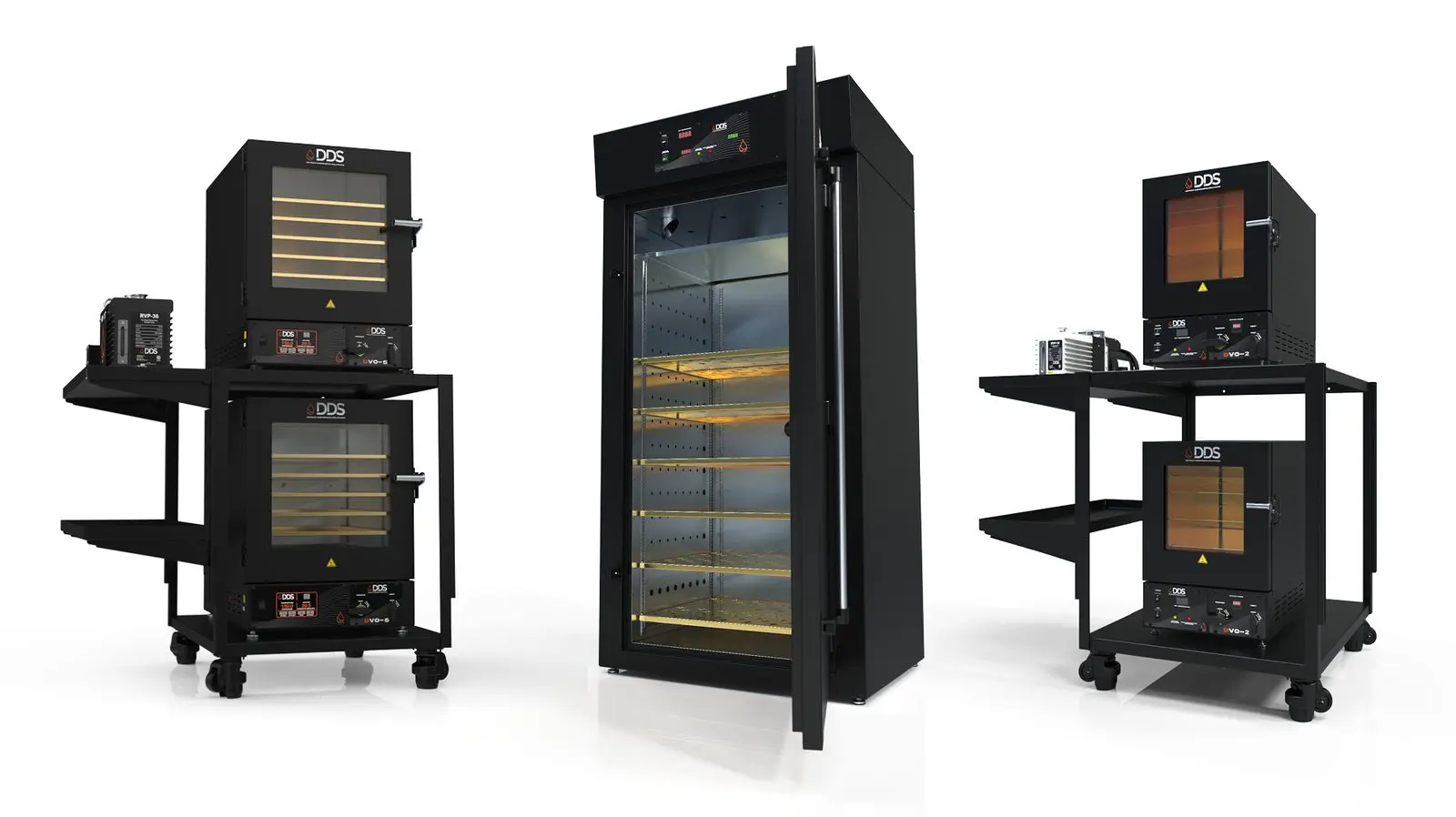
Sizing post-processing equipment to match current extraction output. rather than past output, is what allows the filling, dispensing, and infusion systems to operate at their actual capacity rather than waiting on concentrate that is still in the purge queue.
How do DDS systems work together as a production stack?
The common design thread across the DDS lineup is that every system is built for a single operator, engineered for modular serviceability, and designed around the specific demands of cannabis - not adapted from pharmaceutical or food manufacturing equipment.
That shared design philosophy means the equipment works together operationally. An operation running the CFM-1800 for cartridges, the CDS-1000 for concentrate jars, and the FX-8 for infused pre-rolls can manage all three workflows with a small team. Each system is independent enough to run in parallel, and each one uses the same concentrate materials flowing from post-processing. The full dispensing equipment lineup and the ancillary equipment page show how the stack fits together. DDS also provides professional installation, training, and ongoing technical support for every system, which matters when equipment across multiple production functions needs to work in sequence.
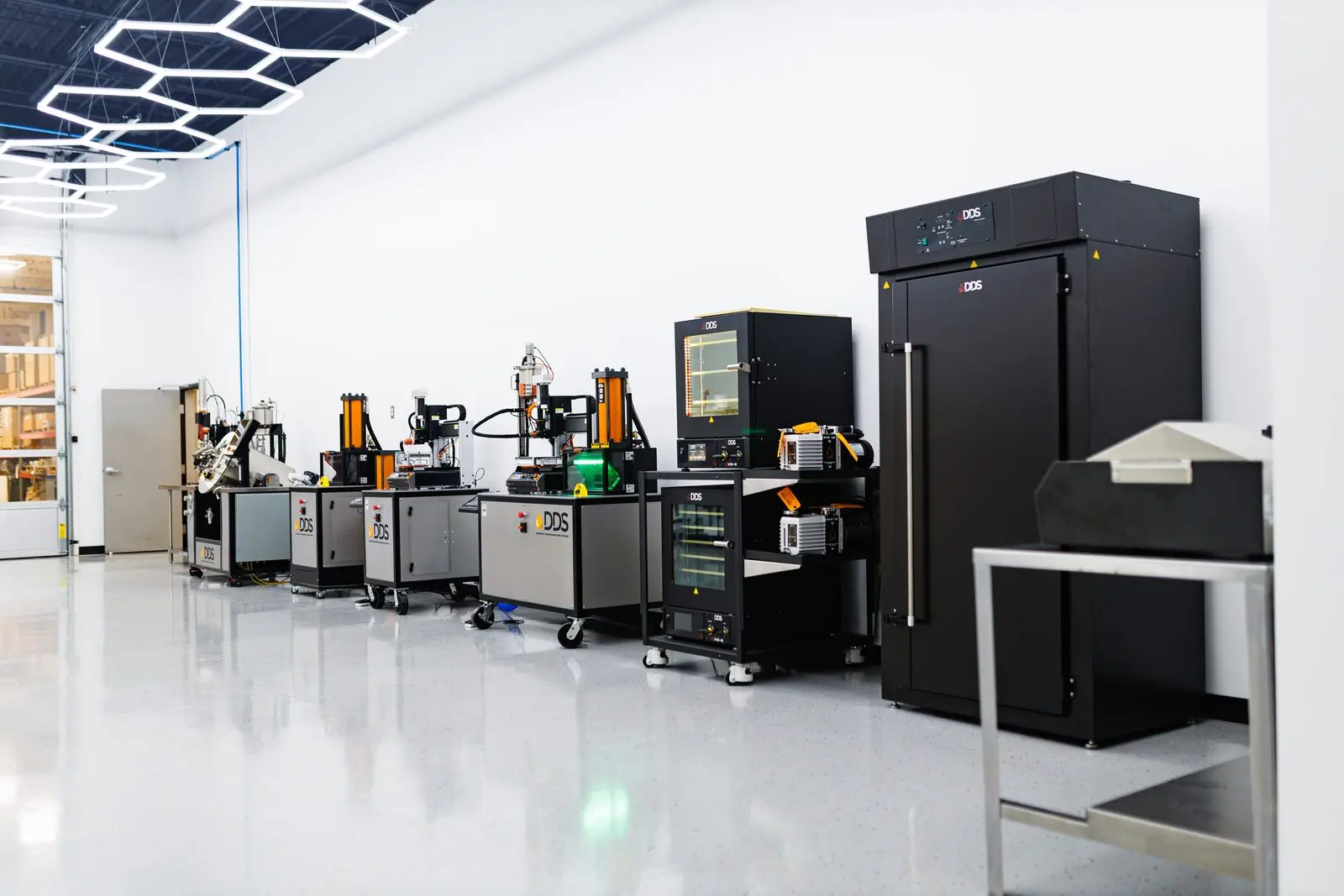
What does scaling the stack actually look like in practice?
Most operations build the stack incrementally rather than all at once, and that approach works well when each investment is made with the next step in mind.
A typical progression starts with cartridge filling automation, usually the CFM-1800 or CFS-1800 depending on whether integrated capping is needed. Once that system is running reliably and cartridge output is stable, the next question is usually whether concentrate jarring or flower infusion represents the bigger growth opportunity. That question is specific to each brand's product mix and market.
From there, post-processing capacity gets evaluated against current extraction volume. Operations that have grown their dispensing side often find the vacuum oven lineup is the next natural investment, not because the oven is failing, but because it was sized for an earlier stage of the operation.
The DDS team works directly with processors to map their current workflow and identify where the stack gaps are — whether that is a first system or a fourth.
FAQs
Do I need to buy all DDS systems at once to build a full automation stack?
No. Most operations build incrementally, starting with the system that addresses their most pressing production constraint. Each DDS system operates independently and integrates with the others as the operation grows.
What is the difference between the CFM-1800 and CFS-1800 as a starting point?
The CFM-1800 fills and caps up to 1,800 vape cartridges per hour with an integrated hydro-pneumatic capping press. The CFS-1800 handles the same fill rate without the integrated press, suited for operations that handle capping separately or want a smaller footprint. Both deliver ±1% dosing accuracy with one operator.
Can the CFM-1800 or CFS-1800 also handle pre-roll infusion?
Yes. Both the CFM-1800 and CFS-1800 can infuse up to 1,500 pre-rolls per hour with a needle swap and preset programming, making them multi-format systems from day one.
What does the CDS-1000 add to an operation already running a cartridge filler?
The CDS-1000 handles concentrate jarring — badder, butter, sauce, live rosin, and other formats — at up to 800 jars per hour with ±1% accuracy at room temperature. For brands producing both cartridges and jarred concentrates, it allows both product lines to scale without one limiting the other.
How does the FX-8 fit into a cartridge-focused operation?
The FX-8 adds infused flower production to an operation that already has concentrate supply flowing from cartridge filling. It processes up to 8 lbs per 5-minute cycle and produces flower compatible with downstream pre-roll machinery, enabling a new product format without a separate concentrate supply chain.
When should I think about post-processing capacity?
Post-processing becomes the bottleneck when purge cycles cannot keep pace with extraction output. If concentrate is queuing before it can be processed, or if your oven runs multiple sequential loads per extraction batch, sizing up the vacuum oven should be the next investment. The DDS ancillary lineup covers ovens from benchtop to production-scale.
Do all DDS systems require separate operators?
Each DDS dispensing system is designed to run at full capacity with one operator. A three-system operation running the CFM-1800, CDS-1000, and FX-8 in parallel can be managed by a small team because none of the systems require multiple operators to function at spec.
What kind of support comes with each system?
Every DDS system includes professional installation, operator training, a one-year warranty, and ongoing technical support. The team is available for remote troubleshooting, and modular construction across the lineup means component replacement does not require extended downtime.
How do I figure out which system to add next?
The most useful starting point is mapping your current production workflow and identifying where concentrate, throughput, or labor bottlenecks are limiting output. The DDS team offers process consultations to help processors make that assessment before committing to the next investment.
Where can I see the full DDS equipment lineup?
The full dispensing equipment lineup is at detroitdispensingsolutions.com/dispensing-equipment and the ancillary post-processing equipment is at detroitdispensingsolutions.com/ancillary.