Why Low-Temperature Filling Matters: Preserving Terpenes in Cannabis Vape Production
Temperature control during cartridge filling means preserving the compounds that define cannabis quality. Terpenes begin to evaporate at temperatures as low as 70°F, with most starting to degrade around 100°F. For cannabis vape manufacturers, this creates a critical challenge: how do you heat distillate and live resin enough to fill efficiently without destroying the very compounds that deliver flavor, aroma, and therapeutic effects?
Low-temperature filling technology addresses this challenge directly, protecting terpene profiles while maintaining production efficiency. Understanding why temperature matters, and how to control it, separates premium vape products from mediocre ones.
The Terpene Degradation Problem
Terpenes are volatile aromatic compounds that give each cannabis strain its distinctive character. When exposed to environmental factors like oxygen, heat, humidity, and light, terpenes decay easily. Unlike cannabinoids such as THC and CBD, which remain relatively stable at moderate temperatures, terpenes begin disappearing the moment conditions become unfavorable.
Setting temperatures above 230°C can degrade active substances including terpenes and cannabinoids present in cannabis. Even at much lower temperatures commonly used in filling operations, damage occurs. Certain terpenes begin to evaporate at temperatures as low as 70°F while others vaporize at around 100°F.
Common Terpene Boiling Points
Different terpenes have different vulnerabilities to heat:
- Caryophyllene: 130°C (266°F) - One of the more heat-stable terpenes
- Pinene: 156°C (313°F) - Contributes pine and citrus notes
- Myrcene: 166-168°C (330-334°F) - Associated with sedative effects
- Limonene: 176°C (349°F) - Delivers lemon and citrus flavors
- Linalool: 198°C (388°F) - Provides floral, lavender-like aroma
While these boiling points seem high, degradation begins well before terpenes reach full evaporation. Some terpenes will begin to evaporate off at temperatures as low as 70°F, although most will begin to degrade at around 100°F. This means that even "moderate" heating during filling operations risks flavor loss and reduced entourage effects.
Why Most Filling Operations Overheat
Traditional cartridge filling methods heat cannabis oil to temperatures far exceeding what's necessary for terpene preservation. The ideal filling temperature for THC distillate typically ranges from 50°C to 70°C (122°F to 158°F), yet many operations push temperatures higher to compensate for equipment limitations.
High temperatures make filling easy; however, high temperatures also lower viscosity, making cannabis resin "runny" and causing it to soak more easily into the cartridge. This creates a vicious cycle: operators increase heat to improve flow, but then face issues with resin soaking into atomizers, inconsistent fill levels, and degraded product quality.
Manual filling guns often operate at 190°F (87°C) or higher, while some automated systems heat distillate between 60-80°C to maintain flow through long oil paths and poorly designed thermal systems. Every degree above the minimum necessary temperature accelerates terpene loss.
The Advantages of Low-Temperature Filling
Operating at the lowest possible temperatures during cartridge filling delivers measurable benefits for product quality, customer satisfaction, and operational efficiency.
Terpene Preservation and Enhanced Flavor
Filling at lower temperatures of 45-55°C preserves terpenes that would otherwise degrade. This temperature range keeps distillate and live resin flowable without pushing into the degradation zone where delicate compounds begin breaking down.
The result is cannabis vape quality that consumers immediately notice. Products filled at lower temperatures maintain the original strain's aroma and flavor profile, delivering the "dab-like" experience that discerning customers seek. When competing products taste harsh or lack character due to heat damage during manufacturing, low-temperature filled cartridges stand out.
Consistent Fill Levels and Reduced Waste
At filling temperatures greater than 60°C, there is very little time to perform the capping action before resin soaks into the cartridge. Lower temperatures provide operators with a wider process window, reducing rushed capping that leads to vacuum lock failures and leaking cartridges.
Consistent viscosity at controlled temperatures also improves dosing accuracy. When oil temperature fluctuates during production, fill weights vary as density changes. Stable low-temperature operation ensures every cartridge contains the specified amount.
Extended Shelf Life
Cannabis vape quality doesn't end at the filling line - products must maintain their characteristics through distribution, retail display, and consumer use. The shelf life of terpenes in vape cartridges is not indefinite, and over time, even under optimal conditions, terpenes can degrade due to oxidation and other chemical reactions.
Starting with a product that hasn't been heat-damaged during manufacturing provides a significant advantage. Terpenes that survive the filling process intact are more stable during storage, extending the window before noticeable flavor degradation occurs.
How Detroit Dispensing Solutions Achieves Industry-Leading Low Temperatures
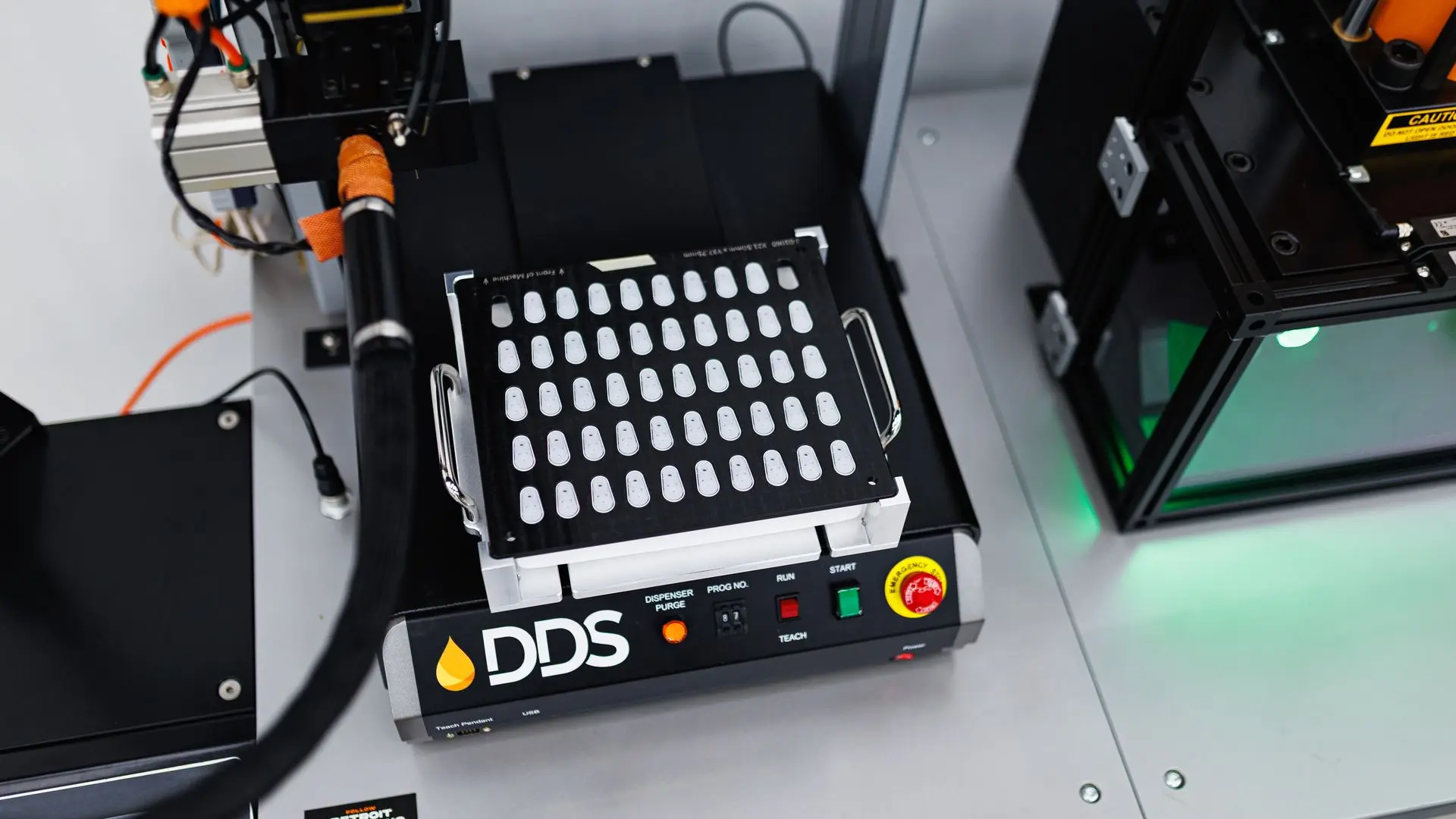
The CFM-1800 and CFS-1800 automated cartridge filling systems from Detroit Dispensing Solutions were engineered specifically to address temperature control challenges in cannabis vape production.
Custom Thermal Management System
Unlike competitors that require heating distillate to 70-80°C, the CFM-1800 and CFS-1800 dispense distillate and live resin at temperatures as low as 50°C. This is achieved through a custom-engineered thermal system with five separate heating zones that maintain consistent temperature throughout the entire oil path.
The system eliminates cold spots where oil could solidify while preventing hot spots that degrade terpenes. Every component in contact with cannabis oil, from the stainless steel reservoir to the dispensing valve, maintains precise temperature control.
True-Rod Positive Displacement Valve Technology
At the heart of low-temperature filling capability is the true-rod positive displacement valve designed specifically for cannabis extracts. This valve delivers metered shots from 0.1ml to 3.5ml with ±1% accuracy even with high-viscosity materials at lower temperatures.
Traditional check-valve systems clog with thick concentrates, forcing operators to increase temperatures beyond what's ideal for terpene preservation. The positive displacement design of the CFM-1800 and CFS-1800 eliminates this problem, allowing reliable operation at temperatures that protect product integrity.
Rapid Capping for Vacuum Lock Formation
Capping your vape cart as fast as possible (within 5 seconds is ideal) prevents resin from soaking into the atomizer and maintains proper fill levels. The CFM-1800 integrates a 30,000-lb capping press that immediately seals cartridges after filling, establishing the vacuum lock before oil can migrate.
This rapid capping capability works synergistically with low-temperature filling. Because oil viscosity remains higher at 50°C compared to 70°C, there's less risk of excessive soaking even if capping takes a few extra seconds. The combination delivers superior consistency compared to systems that rely on overheating to compensate for slow capping processes.
Real-World Impact on Cannabis Vape Quality
For operations producing live resin cartridges, low-temperature filling makes the difference between a product that captures the strain's full terpene profile and one that tastes generic. Temperature-controlled automatic fillers protect terpenes from heat loss and oxidation during the fill cycle.
Consumers increasingly understand the value of terpene-rich products. As the cannabis market matures, brand differentiation depends on delivering premium experiences that justify premium prices. Products that preserve strain characteristics through careful manufacturing build customer loyalty and command higher margins.
The Bottom Line: Temperature is a Quality Control Point
In cannabis vape production, temperature control during filling represents a critical quality control point that impacts every cartridge. Operators who view heating as merely a viscosity management tool miss the broader picture - temperature directly determines whether the final product delivers the experience consumers expect.
Great care must be taken to preserve terpenes from the point of harvest onward. Extraction teams invest significant resources in capturing and preserving terpenes during processing. Manufacturing teams should protect that investment by filling at the lowest temperatures that maintain operational efficiency.
The automated cartridge filling systems from Detroit Dispensing Solutions were built to solve this exact challenge. By dispensing at industry-leading low temperatures while maintaining throughput of 1,800 cartridges per hour, they deliver both efficiency and quality—the combination required for sustainable growth in competitive cannabis markets.
Ready to preserve terpenes and elevate your vape quality? Learn how the CFM-1800 and CFS-1800 deliver industry-leading low-temperature filling. Contact Detroit Dispensing Solutions for a demonstration.